

Plasma treatment doesn't coat, paint, or add mass to a surface. It rearranges the molecular chemistry of the outermost surface layer so adhesives, inks, and coatings wet out and bond instead of beading up. That shift — the plasma treatment surface energy increase — is the entire reason the plasma surface treatment process shows up in adhesion, printing, and bonding specs for plastics, metals, and glass.
Plasma is an ionized gas full of free electrons, reactive radicals, ions, and UV photons. When a part passes through it — from an atmospheric jet or inside a vacuum chamber — those reactive species strike the top few nanometers of the surface, breaking apart weakly bonded contaminants (oils, mold-release residue, oxidized skin layers) so they can be swept away, and cracking surface molecular bonds to open sites for new chemical groups.
Untreated polypropylene typically sits around 29–31 mN/m in surface energy — hydrophobic enough that water and ink bead up and roll off rather than spreading. A pass of a few seconds through most inline plasma systems can push that surface into the 38–42 mN/m range, which is enough for adhesives and inks formulated for polyolefins to wet and grip properly. The bulk material underneath never sees this reaction — only the treated skin changes, which is why plasma treatment is a dry, non-chemical surface-preparation step rather than a coating.
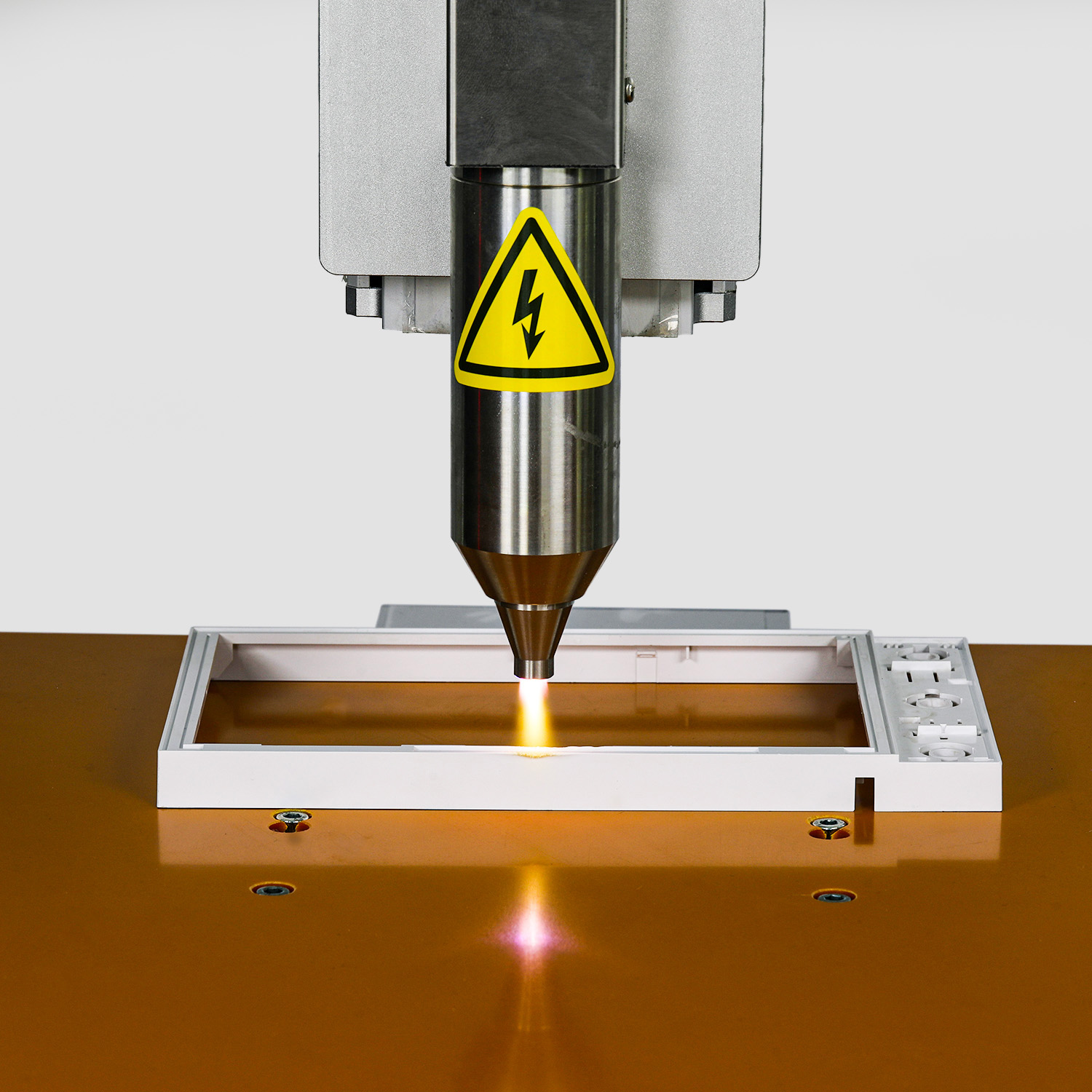
Every downstream benefit tied to plasma processing — stronger bonds, cleaner ink lay-down, more even coating flow — traces back to that one number. A liquid wets and bonds well only when the solid's surface energy is close to or above the liquid's surface tension. Low-energy substrates like polyolefins, silicone rubber, and PTFE sit below that threshold by default, which is why adhesives and inks fail on them without intervention.
That gain isn't permanent. Functional groups can reorient back into the bulk material, or airborne contaminants can re-settle on the surface; on some plastics measurable decay starts within hours, while more stable substrates can hold their gain for a few days. The practical response is to treat as close to the next process step as the line allows, not to treat parts and let them sit.
Plasma treatment, plasma cleaning, and plasma etching share the same discharge but aim at different outcomes: cleaning strips contamination without necessarily raising surface energy much further, etching physically removes material to create texture, and activation — the surface-energy effect described here — is what most adhesion and printing work is actually chasing.
The mechanism is identical across substrates, but the starting point and payoff differ:
The process gas determines which functional groups land on the surface. Compressed air handles general-purpose activation; oxygen intensifies cleaning and oxidative activation; nitrogen grafts amine-type groups; argon cleans through physical bombardment with minimal added chemistry. Running the wrong gas for the job is a common reason a "plasma treated" part still fails downstream — the surface got cleaned but never picked up the chemistry the adhesive needed. The full breakdown of when to use each gas, including how to combine them mid-process, is in the Plasma Gas Selection Guide: Air, O2, N2, Ar.
Because the change is invisible, verification has to be measured. Dyne pens give a fast pass/fail check right on the line; contact angle goniometry gives a precise, repeatable number; XPS identifies exactly which functional groups are present, typically reserved for process development rather than routine QC. Setup and timing details are in Contact Angle Measurement After Plasma, and a side-by-side comparison of when to use each method is in Dyne Ink vs Contact Angle vs XPS.
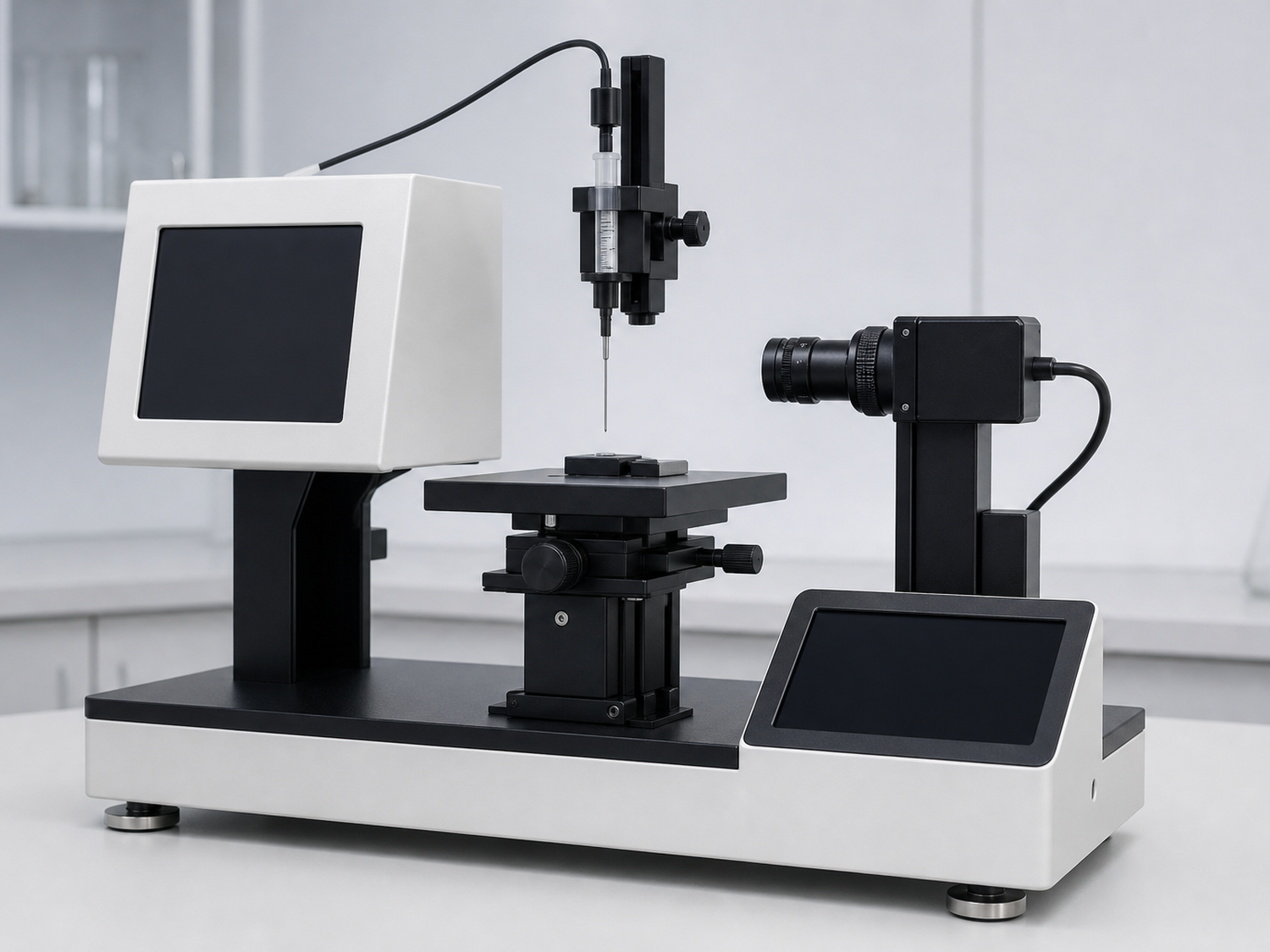
The symptoms pointing to plasma processing as the fix are consistent: ink or paint beading instead of spreading, adhesive peeling cleanly at the interface instead of tearing cohesively, inconsistent dyne readings across a batch, or coating that fails on some parts from the same resin lot but not others. On medical device components where contamination-driven bonding failures were causing scrap, Plasma Cleaning Cut Medical Device Rejections 40% documents rejection rates dropping 40% over a production run once plasma cleaning replaced the prior surface-prep step.
Plasma treatment is not the fix if contamination keeps re-depositing after treatment from a nearby process, or if the substrate is chemically incompatible with the adhesive regardless of surface energy. On flexible packaging lines, plasma treatment options show what changes in ink and coating adhesion once surface energy is controlled at the line rather than left to chance.
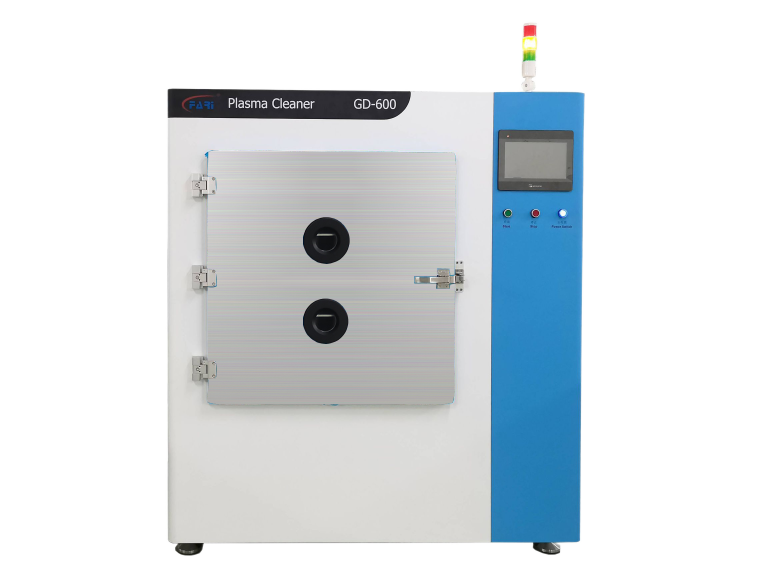
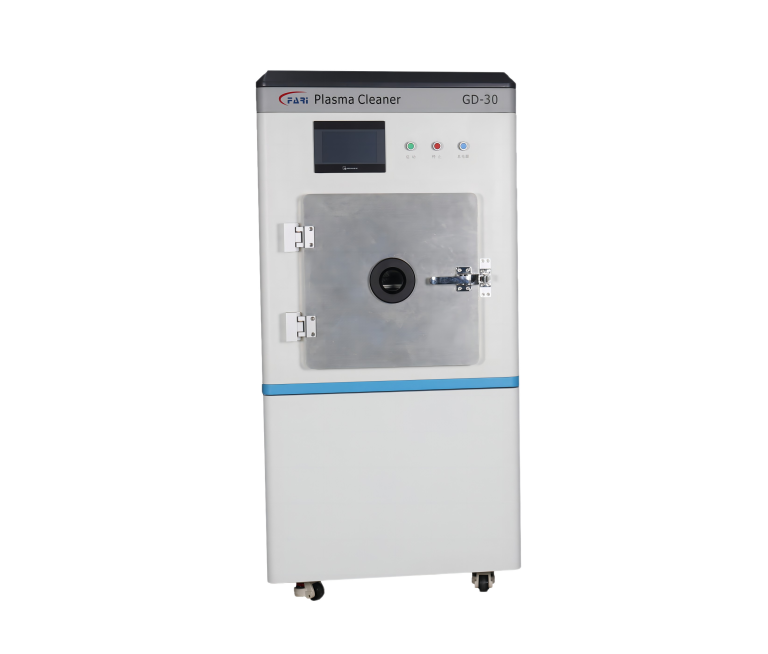
If you're scoping a new line, browse plasma applications by material and industry, compare plasma cleaner options against your part geometry, review Plasma Cleaning Capabilities, and check plasma cleaning machine price ranges before locking in a spec.
What is plasma treatment used for?
Plasma treatment prepares surfaces — mostly plastics, rubber, metals, and glass — so adhesives, inks, and coatings bond or wet out properly instead of beading up or peeling off after a conventional cleaning step has failed to solve the problem.
What is the difference between plasma treatment and plasma cleaning?
Plasma cleaning removes contaminants without necessarily raising surface energy much further. Plasma treatment (activation) specifically targets a surface-energy increase by grafting new functional groups, which is what most adhesion and printing applications actually need.
What is the difference between plasma treatment and corona treatment?
Both raise surface energy using an electrical discharge, but corona treatment works best on flat, high-speed webs like films and foils, while plasma processing handles 3D parts and complex geometries with more uniform, chemistry-controlled results.
Is plasma treatment safe for plastics?
Yes — industrial plasma processing is a non-thermal process, meaning the reactive chemistry happens at the surface while the bulk part stays near ambient temperature. This makes it suitable for heat-sensitive plastics that would deform under thermal processes.
Does plasma treatment change the color or texture of a surface?
Generally no. Plasma treatment modifies molecular-scale surface chemistry within a few nanometers deep, far too thin to visibly alter color or texture under normal process conditions. Any visible change usually signals over-treatment or excessive power settings.
How do you know if plasma treatment worked?
Measure it. A dyne pen gives a fast pass/fail check, contact angle goniometry gives a precise repeatable number, and XPS identifies the exact functional chemistry present. "Looks treated" isn't a verifiable spec — a measured surface-energy value is.
Define your surface-energy target before you spec equipment — everything else, from gas choice to dwell time, follows from that number. Talk to our engineers to work through the target for your specific material and process. For the full set of processes — cleaning, activation, etching, ashing, PECVD — see the plasma technology knowledge base.




English

Spanish
Rogatus ad ultimum admissusque in consistorium ambage nulla praegressa inconsiderate