
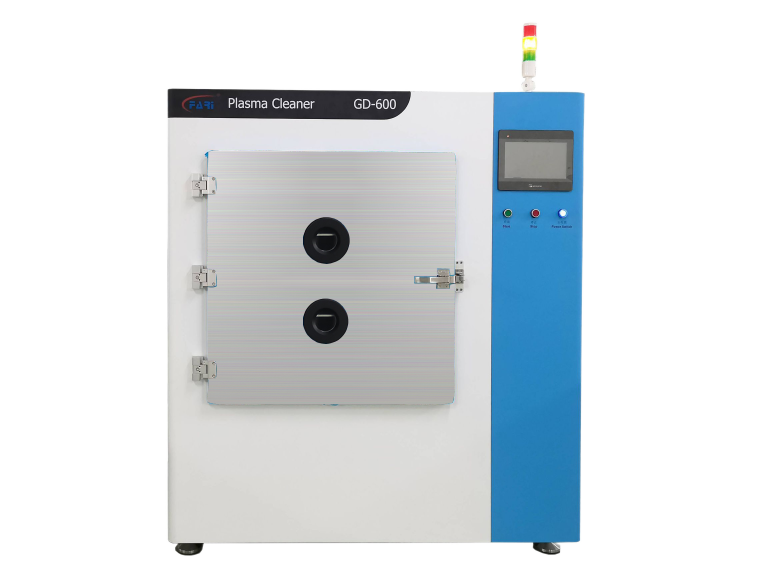
An inline plasma cleaner treats parts as they move continuously through a plasma zone — on a conveyor, robotic arm, or automated fixture — rather than loading a batch into a sealed chamber and running a fixed cycle. The format brings real throughput and automation benefits, but also real trade-offs worth weighing before committing capital to a line integration. Before deciding, compare it directly against the Inline Automatic Vacuum Plasma Cleaner to see whether continuous-feed treatment actually matches your part flow.
An inline system feeds parts continuously through a treatment zone, synchronized with a conveyor or rotating platform — no load, seal, cycle, unload sequence. A standalone vacuum chamber cleaner works the opposite way: parts load into a sealed chamber, air is pumped to a controlled vacuum level, plasma runs for a set step, then the chamber vents before the next batch.
The difference is part-flow logic, not treatment chemistry. Both formats can run cleaning, activation, etching, or ashing — inline is built for continuous production rhythm, chamber systems for controlled batches with deeper vacuum-level uniformity.
Continuous throughput. Parts move through rather than waiting on a load/seal/vent cycle, removing the batch-changeover pause from the process.
Automation & line integration. Fixtures, control interfaces, and modules can be configured to match conveyors, XYZ platforms, and rotating systems through Fari Plasma’s OEM/ODM customization process — so the plasma step reports to the same PLC logic as the rest of the line.
Repeatable treatment. Automatic process control reduces the variance that comes from manual loading. Once a recipe — power, gas flow, dwell — is set, every part gets the same exposure, which matters when downstream printing or bonding depends on consistent surface energy.
These limitations apply to plasma cleaning generally, regardless of format:
| Factor | Inline / Continuous | Batch / Vacuum Chamber |
|---|---|---|
| Best for | High-volume, continuous-feed production | Lower-volume runs or applications needing deep, high-power treatment |
| Part uniformity needed | High — fixtures built around one geometry | Lower — chamber accommodates varied shapes |
| Floor space | Linear footprint along the line | Compact, single load-and-seal station |
| Vacuum requirement | Atmospheric or vacuum, depending on configuration | Requires a sealed chamber at controlled vacuum level |
| Automation style | PLC-driven, integrated into line logic | Automatic/manual modes, run as standalone station |
As an example, the RD-200 rotary drum plasma cleaner runs PLC + touch-screen control in automatic and manual modes inside a 200 L chamber at a 10 Pa vacuum level — proof automation isn’t exclusive to inline formats. What differs is footprint and part flow, not control sophistication. For applications needing deeper vacuum uniformity or higher plasma power than a conveyorized zone delivers, a High-Power Vacuum Plasma Treatment system is worth comparing directly against inline.
Choose inline when volume is high and continuous, part geometry is repeatable, a conveyor or automation line already exists, and consistency across thousands of identical parts matters more than treating varied shapes. If those boxes check, the inline automatic vacuum plasma cleaner is built for exactly that production rhythm. Talk to us about your line before finalizing fixture design.
Skip inline when volume is low or R&D-stage, part shapes vary frequently, recipes change often between short runs, or budget doesn’t yet justify integration engineering. A batch or benchtop vacuum system typically fits better in these cases — lower upfront engineering and faster changeover between part types.
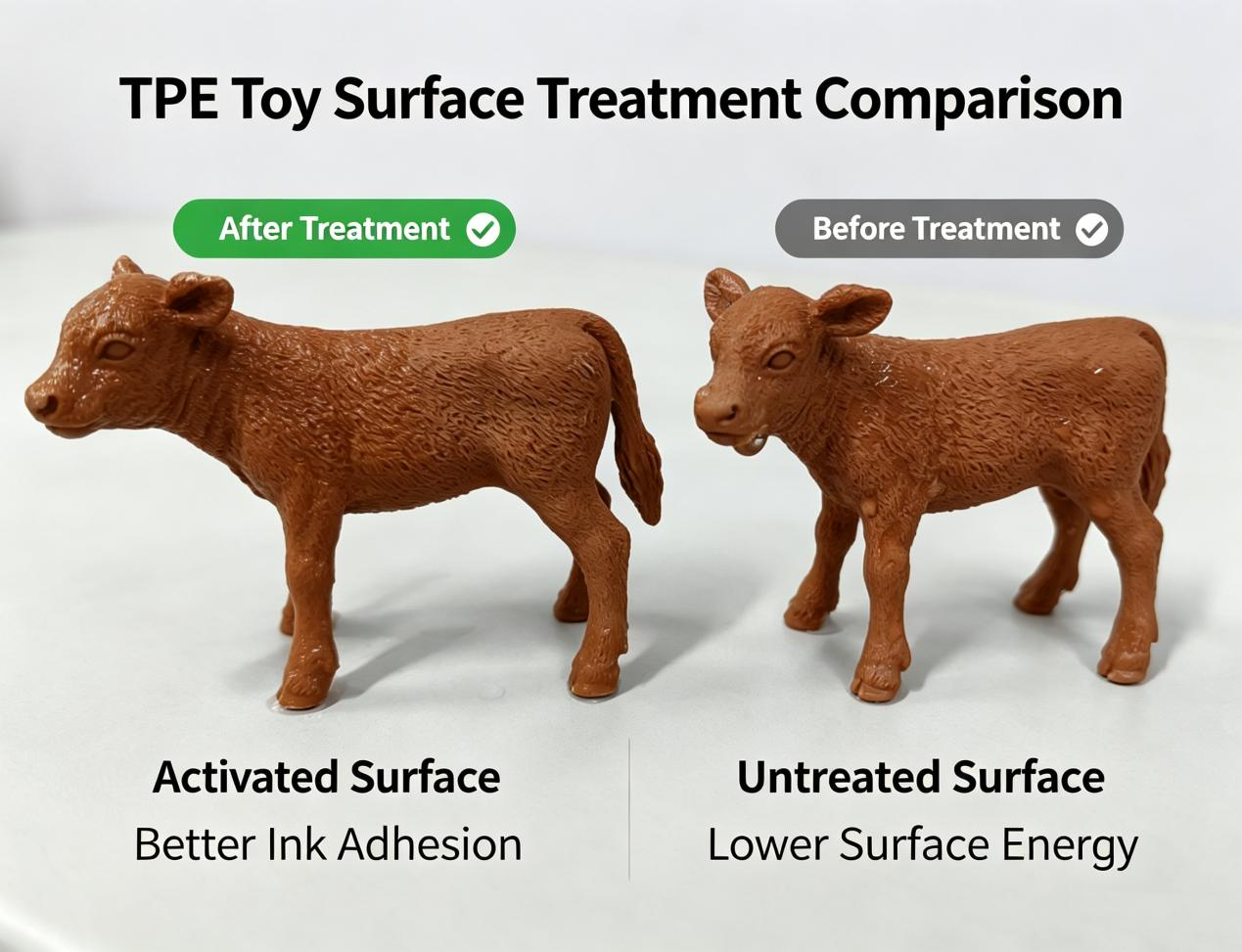
Continuous-feed treatment earns its keep wherever parts move at volume and need a consistent surface before the next step. In packaging and printing, inline treatment prepares surfaces for carton gluing and adhesion without adding a separate offline station. In electronics and energy manufacturing, inline steps support processes like lithium battery manufacturing, where consistent prep across high part counts is part of the production rhythm rather than a batch afterthought. Browse plasma cleaner applications by industry to see which format fits your material and volume profile.
What are the disadvantages of plasma cleaning?
Plasma cleaning is limited by line-of-sight exposure, ongoing gas consumption, and a treated-surface window that decays over time. It doesn’t remove heavy grease, rust, or paint, requires calibrated power/gas parameters, needs trained operators for recipe tuning, and involves upfront equipment investment regardless of format.
What is the difference between an inline and a batch plasma cleaner?
An inline cleaner treats parts continuously as they move through a conveyor or automated fixture, matching production line speed. A batch cleaner loads parts into a sealed chamber, runs a fixed cycle under vacuum, then unloads before the next batch — better suited to varied part shapes or lower volumes.
Is an inline plasma cleaner suitable for low-volume production?
Generally no. Inline systems are engineered around a specific fixture geometry and line speed, so low-volume or frequently changing part runs don’t justify the integration cost. A batch or benchtop vacuum system offers more flexibility for smaller runs and prototype work.
Do inline plasma cleaners require vacuum, or can they run at atmospheric pressure?
Both configurations exist. Atmospheric inline systems run at ambient pressure with no chamber to seal, suiting continuous line speeds. Vacuum-based inline configurations use a sealed process zone for deeper, more uniform treatment, trading some line-speed flexibility for treatment consistency.
How long does the surface effect from plasma cleaning last before parts need further processing?
Plasma-activated surface energy decays over time rather than staying fixed indefinitely. The exact window depends on the material and environment, but the practical rule is to move treated parts into the next bonding, printing, or coating step promptly rather than holding them in inventory.
Can an inline plasma cleaner be integrated into an existing conveyor or automation line?
Yes — that’s the core use case. Fixtures, control interfaces, and modules can be configured to match existing conveyors, XYZ platforms, or rotating systems through an OEM/ODM customization process, so the plasma step reports to the same line logic as other automated stations.
Inline plasma cleaning earns its place on high-volume, repeatable lines where automation and throughput outweigh flexibility. If your part geometry varies or volume doesn’t justify line integration yet, a batch or vacuum chamber system is the more practical starting point. Either way, reach out to discuss your specific line configuration before committing to a fixture design.




English

Spanish
Rogatus ad ultimum admissusque in consistorium ambage nulla praegressa inconsiderate