Blog
Obtén las Últimas Tendencias de la Industria
-
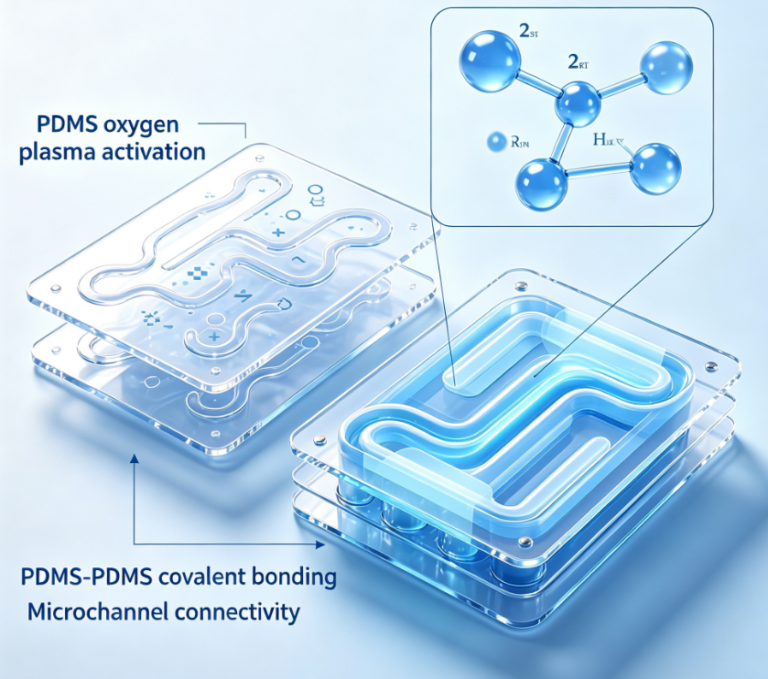
 Fundamentos del PlasmaPlasma bonding is the use of plasma-generated surface activation to join two materials directly, at the molecular level, without adhesives, primers, or solvents. Engineers reach for it in medical microfluidics, silicon wafer bonding, silicone/elastomer device assembly, and anywhere an adhesive layer would add unwanted mass, outgassing, or a failure point.22 Sep, 2026Plasma Bonding Explained: How Plasma Enables Adhesive-Free Bonds
-
Fundamentos del PlasmaPlasma treatment doesn't coat, paint, or add mass to a surface. It rearranges the molecular chemistry of the outermost surface layer so adhesives, inks, and coatings wet out and bond instead of beading up. That shift — the plasma treatment surface energy increase — is the entire reason the plasma surface treatment process shows up in adhesion, printing, and bonding specs for plastics, metals, and glass.14 Sep, 2026Tratamiento de Superficies con Plasma Explicado: Qué Hace Realmente y Por Qué es Importante
-
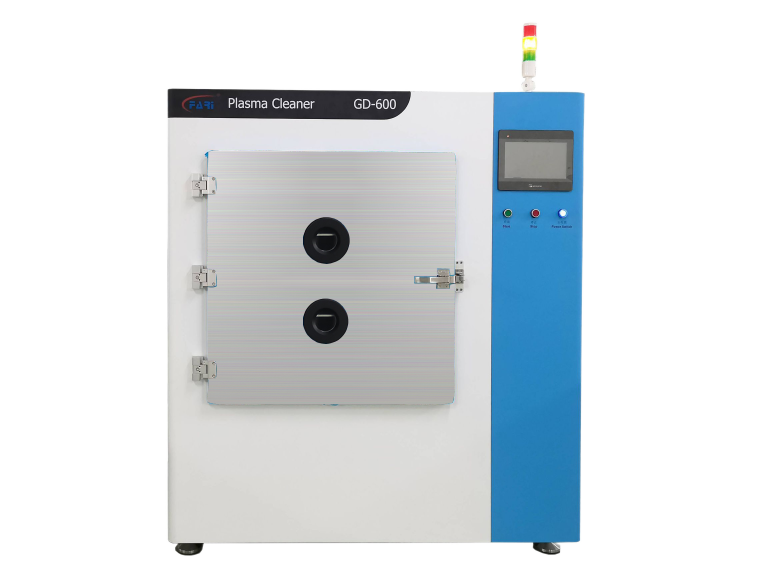
Fundamentos del PlasmaAn inline plasma cleaner treats parts as they move continuously through a plasma zone — on a conveyor, robotic arm, or automated fixture — rather than loading a batch into a sealed chamber and running a fixed cycle. The format brings real throughput and automation benefits, but also real trade-offs worth weighing before committing capital to a line integration. Before deciding, compare it directly against the Inline Automatic Vacuum Plasma Cleaner to see whether continuous-feed treatment actually matches your part flow.04 Sep, 2026Inline Plasma Cleaner Pros and Cons: Advantages, Limitations & When to Use
-
Fundamentos del PlasmaOxygen plasma is ionized oxygen gas — a mix of atomic oxygen, O⁺ and O₂⁺ ions, ozone, and ultraviolet photons — generated by applying RF or other electrical energy to O2 gas inside a vacuum chamber or an atmospheric plasma head. It's the most widely used plasma chemistry in surface treatment because it's cheap, available anywhere compressed gas or an oxygen generator can supply it, and reactive enough to clean, activate, or etch almost any organic-contaminated surface. It also has limits — it oxidizes copper and silver, over-treats thin polymer films, and can't reach shadowed geometry at atmospheric pressure — which is where argon, air, or nitrogen take over.03 Sep, 2026Oxygen Plasma Cleaning: How It Works and When to Use It
-
Fundamentos del PlasmaPECVD (plasma-enhanced chemical vapor deposition) uses an electrically generated plasma to activate reactant gases so a thin film builds up on a substrate at temperatures far lower than conventional thermal CVD requires. That single mechanism — replacing heat with plasma energy as the activation source — is the PECVD working principle, and it's why plasma-enhanced CVD shows up wherever engineers need to deposit dielectric, passivation, or optical films on substrates that can't tolerate a high-temperature furnace step.02 Sep, 2026PECVD Explained: How Plasma-Enhanced CVD Deposition Works
-
Fundamentos del PlasmaPlasma applications span a much wider range than most people expect. The same ionized gas that lights up a neon sign also cleans microchips, activates plastic before printing, sterilizes medical instruments, and etches patterns onto silicon wafers. Plasma occurs naturally in lightning and stars, gets generated intentionally in laboratories and factories, and shows up in consumer electronics like plasma TVs — spanning natural phenomena, physics, industrial surface treatment, and medicine.01 Sep, 2026Plasma Aplicaciones: Where Plasma Surface Treatment Is Used Across Industries