

By the Fari Plasma Applications Engineering Team — ISO 9001-certified process engineering group | Reviewed March 2026
Plasma treatment system cost runs from about $3,000 for a benchtop lab unit to $500,000+ for a semiconductor-grade inline system. Chamber size, automation level, and application determine the cost far more than the brand on the nameplate.
Benchtop units run $3,000–$15,000, batch systems $15,000–$80,000, inline automated lines $80,000–$300,000, and semiconductor-grade RIE/PECVD systems $150,000–$500,000+. These ranges reflect equipment quotes reviewed across the industry in 2025, covering single-chamber benchtop configurations through multi-nozzle inline lines.
| Tier | Typical Price Range | Best For |
|---|---|---|
| Benchtop / entry | $3,000 – $15,000 | R&D, small-batch cleaning, occasional lab use |
| Batch / lab-production | $15,000 – $80,000 | Medical, electronics, and packaging batch runs |
| Inline / automated | $80,000 – $300,000 | Continuous production lines, PCB and component treatment |
| Semiconductor / custom RIE-PECVD | $150,000 – $500,000+ | Photoresist stripping, etching, thin-film deposition |
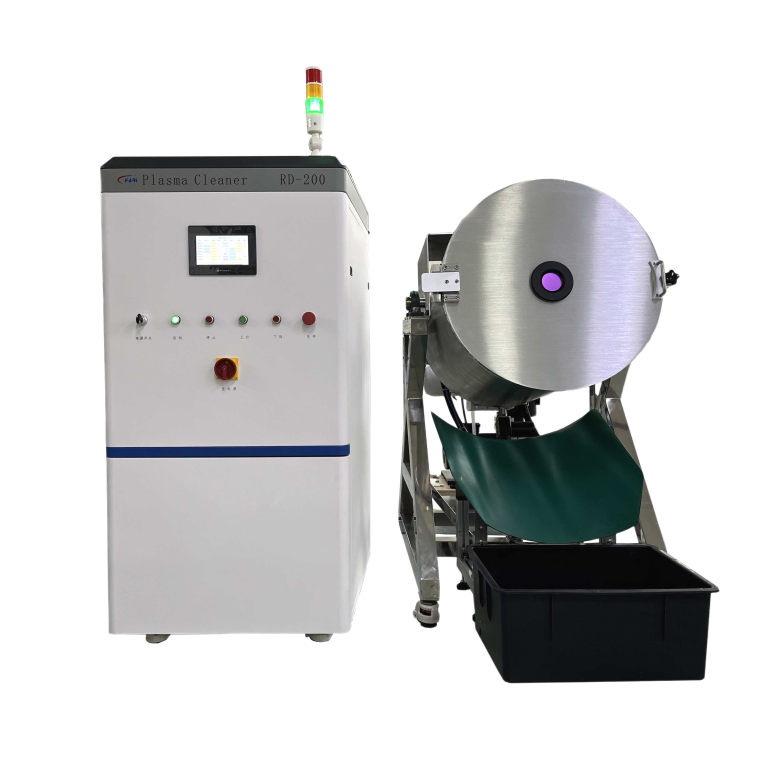
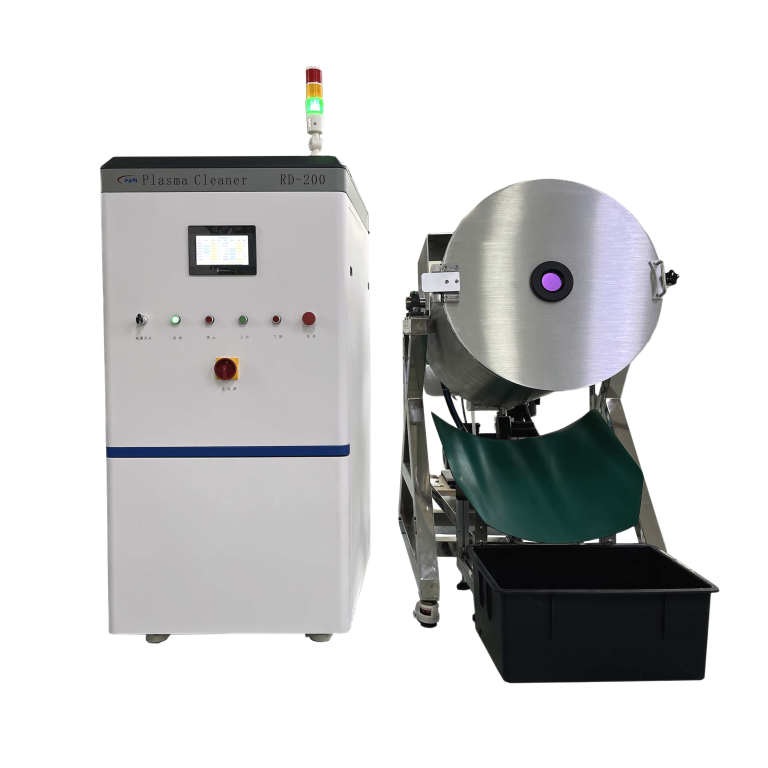
Chamber size & electrode configuration. Larger chambers, multi-electrode arrays, and rotary drum designs require more precision machining and tight-tolerance assembly than a single small vacuum chamber, which raises the base cost.
Automation & inline integration. This is the biggest cost jump in the market. Adding a conveyor interface, PLC controls, and robotic positioning to move a benchtop concept into a production line can multiply the price several times over.
RF/microwave vs. standard generator power. Higher-power RF generators with automatic matching networks cost more than fixed-frequency units, but they also expand which materials and gases the system can process. Gas choice changes running cost too: air, oxygen, nitrogen, and argon each carry different consumption profiles, detailed in a process gas cost comparison.
The equipment quote is rarely the full budget. Plan for:
A chemical primer total cost comparison lays out how these line items compare against primer and solvent alternatives over a multi-year horizon. Chamber-style systems have their own equipment-level inclusions, listed in plasma cleaning chamber system specifications.
Payback period depends on what plasma treatment replaces. Manufacturers eliminating a primer or solvent step recover cost through material savings; those fixing bonding or adhesion failures recover it through lower scrap and rejection rates. A consumer electronics manufacturer documented a 34% scrap-rate reduction after switching to plasma cleaning, detailed in a consumer electronics scrap-rate case study. A medical device manufacturer cut rejection rates using the same approach, detailed in a medical device rejection-rate case study.
Occasional batches or process validation call for a benchtop or batch unit in the $3,000–$80,000 range — buying inline capacity you don’t yet need wastes capital. Once volume justifies continuous processing, or corona treatment’s lower activation ceiling starts limiting results, it’s time to move up. That transition point is detailed in a corona-to-plasma upgrade guide.
Consumer-grade plasma units sold on general marketplaces typically run $500–$2,000. They can handle basic surface activation demos, but they generally lack the process control, repeatability, and documented calibration that production and regulated environments require. Anything beyond a one-off test needs a system with logged power, gas-flow, and plasma-parameter calibration.
How much does a plasma machine cost?
Plasma cleaning machine price ranges from roughly $3,000 for a benchtop unit to $500,000+ for a semiconductor-grade system. The two biggest cost drivers are chamber size and how much automation or inline integration the system needs.
What are the disadvantages of plasma cleaning?
Batch systems add cycle time for pump-down and venting, process gas is an ongoing consumable cost, and operators need training to get repeatable results. None of these are dealbreakers, but they belong in total cost of ownership, not just the purchase price.
How long does plasma cleaning last?
Surface activation from plasma treatment typically holds for hours to a few days, depending on the material and storage conditions. This window matters for production planning — parts often need to move to the next process step (bonding, coating, printing) before the effect fades.
What is the price of a cleaning machine?
For a plasma system, expect $3,000–$500,000+ depending on tier — see the range table above. This is distinct from ultrasonic or chemical cleaning equipment, which uses different mechanisms and a different pricing structure entirely.
How much does a small benchtop plasma cleaning machine cost?
Entry-level benchtop units typically run $3,000–$15,000. They suit R&D, material screening, and low-throughput lab or production use rather than continuous manufacturing lines.
Fari Plasma builds catalog units across every tier above and offers OEM/ODM customization — size, automation interfaces, and branding — for buyers moving past entry-level equipment, backed by Fari Plasma equipment manufacturing capabilities. Confirm the process results you’re paying for with a contact angle measurement guide or a surface energy testing methods comparison before finalizing a spec. The plasma cleaner product catalog and the plasma cleaner resource library cover standard configurations and further reading on gas selection and chamber design.



English

Spanish
Rogatus ad ultimum admissusque in consistorium ambage nulla praegressa inconsiderate