

Oxygen plasma is ionized oxygen gas — a mix of atomic oxygen, O⁺ and O₂⁺ ions, ozone, and ultraviolet photons — generated by applying RF or other electrical energy to O2 gas inside a vacuum chamber or an atmospheric plasma head. It’s the most widely used plasma chemistry in surface treatment because it’s cheap, available anywhere compressed gas or an oxygen generator can supply it, and reactive enough to clean, activate, or etch almost any organic-contaminated surface. It also has limits — it oxidizes copper and silver, over-treats thin polymer films, and can’t reach shadowed geometry at atmospheric pressure — which is where argon, air, or nitrogen take over.
Plasma is often called the fourth state of matter: a gas energized enough that a portion of its molecules split into free electrons and ions, alongside neutral excited species. When the feed gas is oxygen, that ionized mixture contains atomic oxygen radicals, O₂⁺ and O⁺ ions, ozone (O₃), metastable excited oxygen molecules, and vacuum-UV photons — all of which are chemically reactive toward carbon-based material sitting on a surface.
That reactivity is the key difference from an inert-gas plasma. Argon plasma contains no reactive chemical species at all — it works purely through ion bombardment, physically knocking contaminants loose without any chemical reaction. Oxygen plasma does both: it chemically oxidizes organic material and delivers ion bombardment, which is why it’s the default choice for cleaning and surface modification while argon plasma cleaning is reserved for oxidation-sensitive metals and delicate substrates.
Every plasma gas glows a different color because excited atoms and molecules release a photon of light as they relax back to a lower energy state, and the wavelength of that photon depends on the gas. Oxygen plasma characteristically glows a light blue. Argon plasma tends toward violet-pink, and air plasma (a mix of nitrogen and oxygen) often looks purplish-pink rather than pure blue — which is why operators who switch gas types sometimes notice the color shift and wonder if something’s wrong with the system. It isn’t: the color is simply a different atomic emission spectrum, not an indicator of process quality on its own. It’s a useful quick visual check that the correct gas is flowing and the discharge is stable, but it shouldn’t replace process monitoring like power, pressure, and gas flow readings.
Oxygen plasma does three distinct things to a surface depending on process settings, exposure time, and equipment type. They share the same underlying chemistry but produce different outcomes.
Oxygen plasma cleaning works by chemically oxidizing organic contaminants — oils, fingerprint residue, mold-release agents, hydrocarbon films — breaking carbon-hydrogen and carbon-carbon bonds and converting them into CO₂, H₂O, and lighter volatile compounds. In a vacuum system, those by-products are pumped out of the chamber; in an atmospheric system, they disperse away from the treated surface. The result is a surface free of organic residue without solvents or wet chemistry.
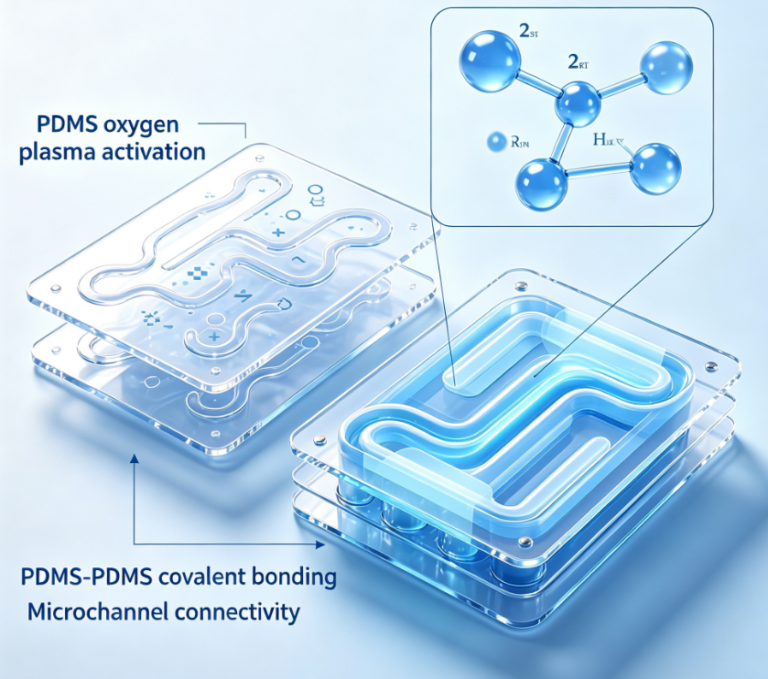
At shorter exposure and lower energy, the same reactive oxygen species graft polar functional groups — hydroxyl (-OH) and carbonyl (-C=O) — onto polymer and plastic surfaces. This raises surface energy and wettability, which is why oxygen plasma is used to prep parts before adhesive bonding, printing, or coating. The distinction between what counts as “cleaning” versus “activation” versus “etching” in O₂ plasma is a matter of degree and intent, not different gases, and it’s covered in full in Activation vs. Cleaning vs. Etching.
Extend the exposure or raise the power, and oxygen plasma removes bulk material rather than just surface contamination — this is plasma ashing, used almost exclusively for stripping photoresist and organic films in semiconductor manufacturing. The mechanism combines chemical reaction (oxidation) with physical ion bombardment, giving controlled, uniform material removal that wet stripping can’t always match on fine features.
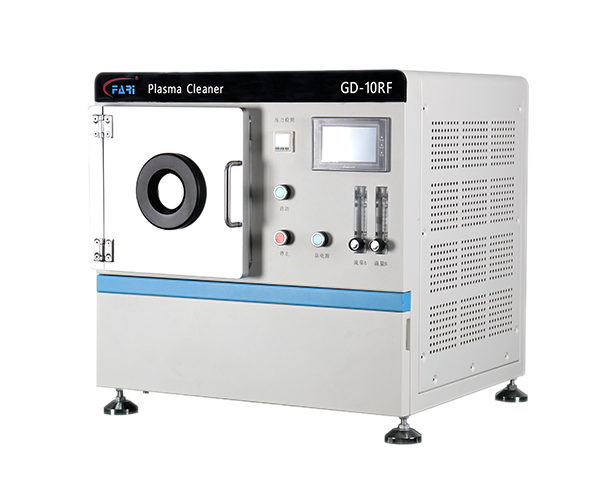
For lab-scale and small-batch work where oxygen is the gas of choice, benchtop equipment configured specifically for O2 — like the RF Oxygen Plasma Surface Cleaner — handles cleaning and activation without the footprint of a full production line.
| Gas | Primary action | Best for |
|---|---|---|
| Oxygen (O2) | Reactive — oxidizes organics, activates polymers, etches/ashes | Cleaning, activation, resist stripping on non-oxidation-sensitive materials |
| Argon | Inert — physical ion bombardment only, no chemical reaction | Metals and materials that oxidize easily (silver, copper); longer exposure without surface damage |
| Air | Mixed reactive (N2 + O2) — economical, moderate activation | Cost-sensitive lines where pure O2 isn’t justified |
| Nitrogen | Largely inert, some reactive nitrogen chemistry | Cost-sensitive activation where oxidation must be avoided |
Oxygen is reactive and chemically alters the surface; argon is inert and only cleans through mechanical bombardment, which is why materials like copper and silver — which oxidize under O2 — are typically treated with argon or an argon/oxygen mix instead. This is a summary, not the full decision framework: for a complete side-by-side breakdown of when each gas wins, see Argon vs Oxygen Plasma Cleaning, and for choosing between all four gases against your specific material and process goal, work through the Plasma Gas Selection Guide: Air.
Advantages: oxygen is low-cost and widely available (bottled or generated on-site), it’s highly effective at removing organic contamination, and it measurably improves wettability and bond strength on plastics and polymers without solvents.
Limitations, honestly stated:
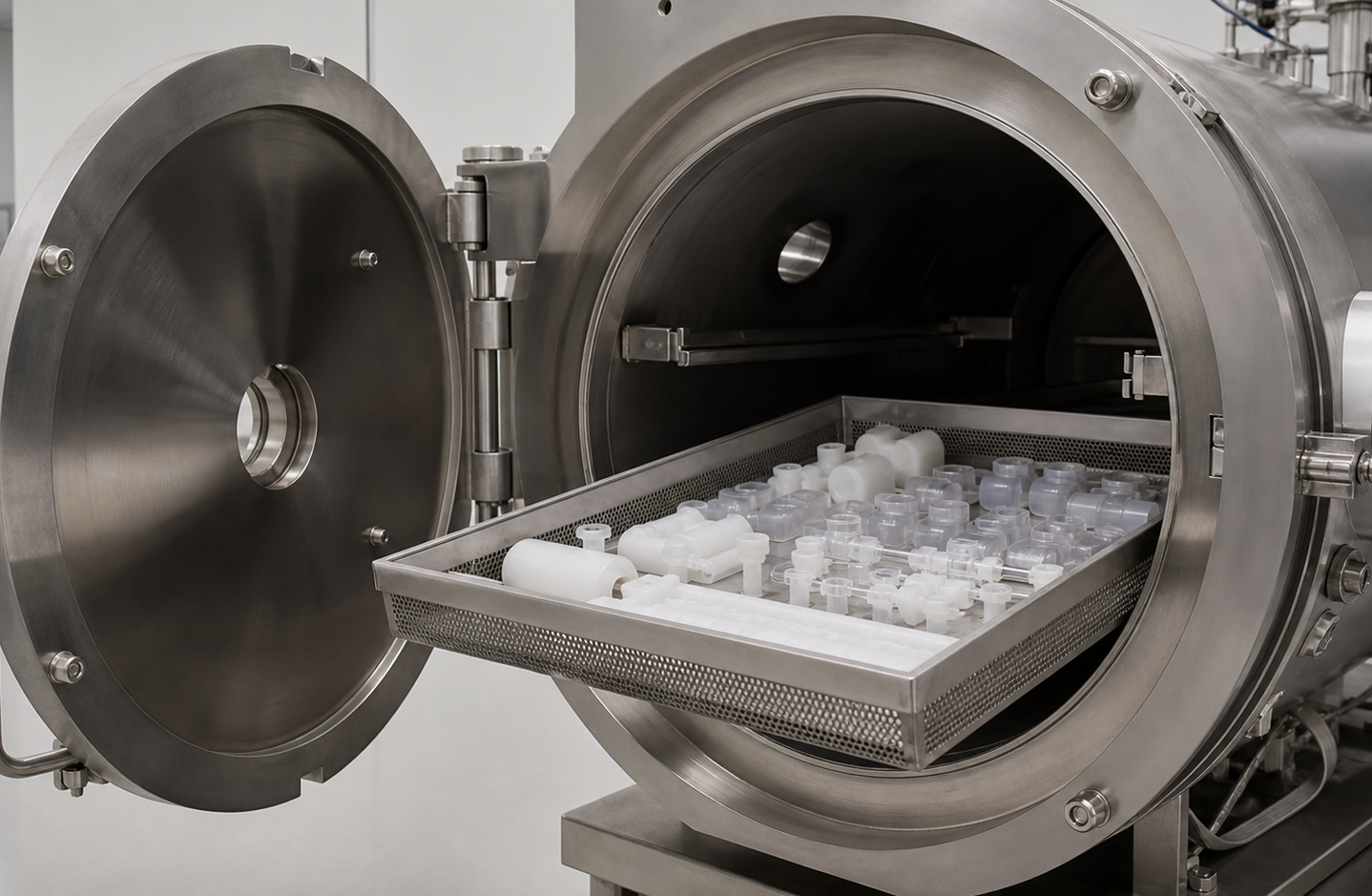
Oxygen plasma can be generated two ways. Atmospheric O₂ plasma runs at ambient pressure, typically inline on a production line, trading some treatment uniformity for speed and continuous throughput — see Atmospheric Plasma Treatment: How It Works and Why Manufacturers Use It and Atmospheric Plasma Surface Treatment for the mechanics. Vacuum oxygen plasma runs in a sealed, low-pressure chamber, giving deeper penetration into complex geometries and more uniform treatment across a batch — the trade-offs are covered in vacuum plasma options. Neither is universally “better”; the choice depends on part geometry, throughput needs, and whether the surface has recesses or complex 3D features that atmospheric plasma heads can’t reach evenly.
If you’re evaluating which chamber size, gas configuration, or automation interface fits your part geometry and production volume, get in touch for a technical evaluation.
What color is oxygen plasma?
Oxygen plasma glows a characteristic light blue. The color comes from photons released as excited oxygen atoms and molecules relax to lower energy states; other gases glow different colors (argon tends violet-pink, air often purplish), so color is a quick visual check on gas type but not a substitute for monitoring power and flow readings.
How long does oxygen plasma treatment last?
Surface activation from O₂ plasma isn’t permanent. Polar groups created on a polymer surface gradually reorient over time — a process called hydrophobic recovery — typically over hours to a few days depending on the material. For bonding, printing, or coating, treated parts should move to the next process step promptly rather than sit in storage.
Can oxygen become a plasma?
Yes. Any gas becomes plasma when enough energy — typically RF or other electrical excitation — ionizes a portion of its molecules into free electrons, ions, and reactive neutral species. Oxygen ionizes readily under standard plasma cleaning and etching conditions, which is exactly why O2 is the most common plasma gas in industrial surface treatment.
What are the disadvantages of plasma treatment?
Plasma-treated surfaces can lose their improved wettability over time (hydrophobic recovery), oxygen plasma isn’t ideal alone on easily oxidized metals without argon mixed in, and effective treatment requires calibrated equipment and process control — too much exposure or power can over-etch delicate substrates rather than simply cleaning them.
What is the difference between oxygen plasma and plasma in general?
“Plasma” is the general ionized-gas state; “O₂ plasma” specifies that the feed gas is O2, which makes the resulting plasma chemically reactive (oxidizing) rather than purely inert like argon plasma. The base physics — ionization, excited species, characteristic glow — is the same across gases; the chemistry and surface effect differ by which gas is used.
What equipment generates oxygen plasma?
Both vacuum plasma cleaners and atmospheric inline plasma systems can run on oxygen gas, provided they have an oxygen-compatible gas line or generator and appropriate process controls. Benchtop units like the RF Oxygen Plasma Surface Cleaner are configured specifically for O2-based cleaning and activation at lab and small-batch scale.
What temperature does oxygen plasma reach?
Oxygen plasma is non-thermal: while individual electrons and ions carry high energy, the bulk gas and treated part surface stay near room temperature during typical cleaning and activation processes. This is a common misconception — the plasma looks and sounds energetic, but it doesn’t heat-soak the substrate the way a thermal process would.
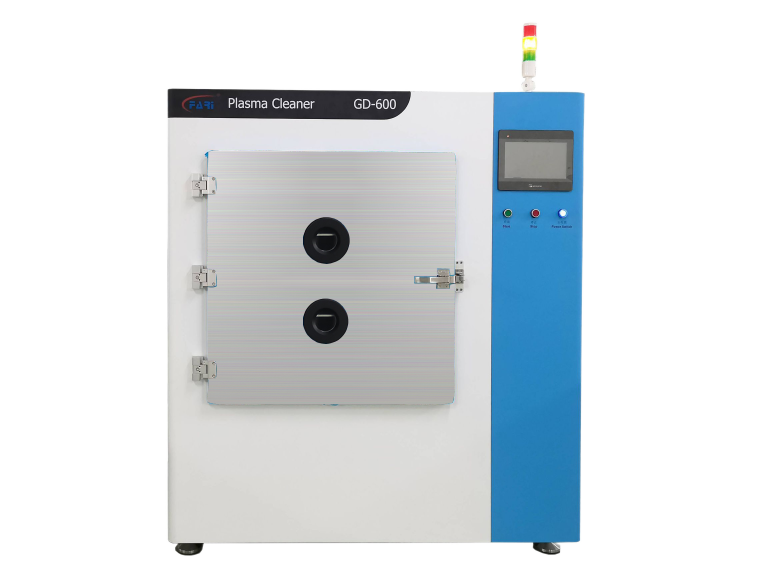
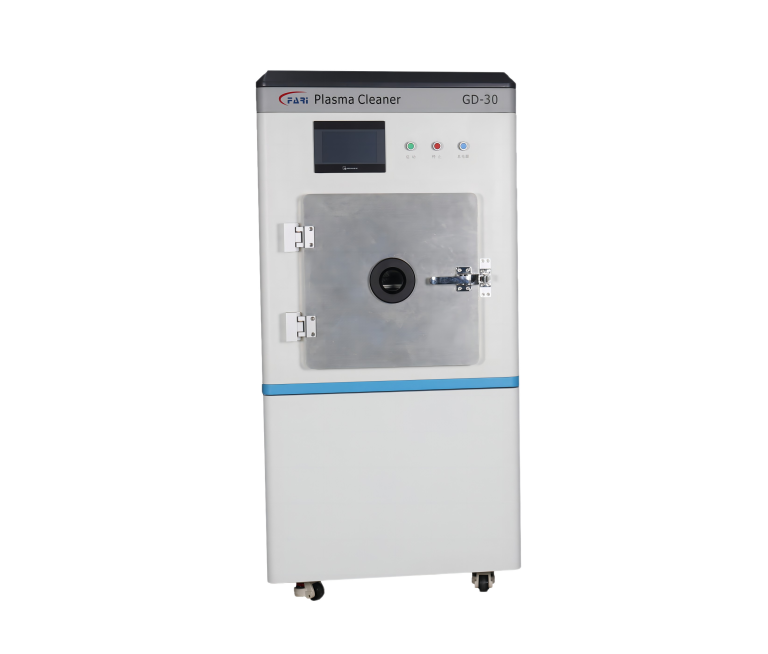
Ready to match an oxygen-based process to your material and production volume? Talk to Fari Plasma’s technical team about equipment sized for your parts.




English

Spanish
Rogatus ad ultimum admissusque in consistorium ambage nulla praegressa inconsiderate