A false eyelash can look perfect when it leaves the production line and still fail because of a surface problem measured at the molecular level.
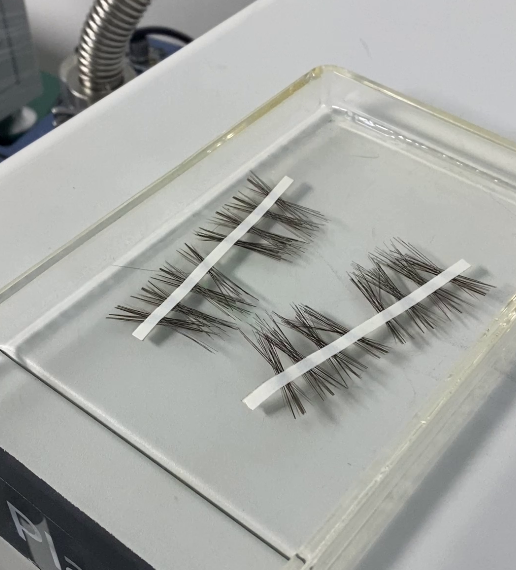
PBT polyester fiber is widely used for synthetic lashes, faux mink lashes and other artificial eyelash products. The material provides the flexibility and shape needed for lash manufacturing, but its surface is naturally difficult for many adhesives to wet.
Processing lubricants and silicone-based finishing agents can make the problem worse. When these residues remain around the lash root, adhesive can bead or pull away instead of spreading uniformly.
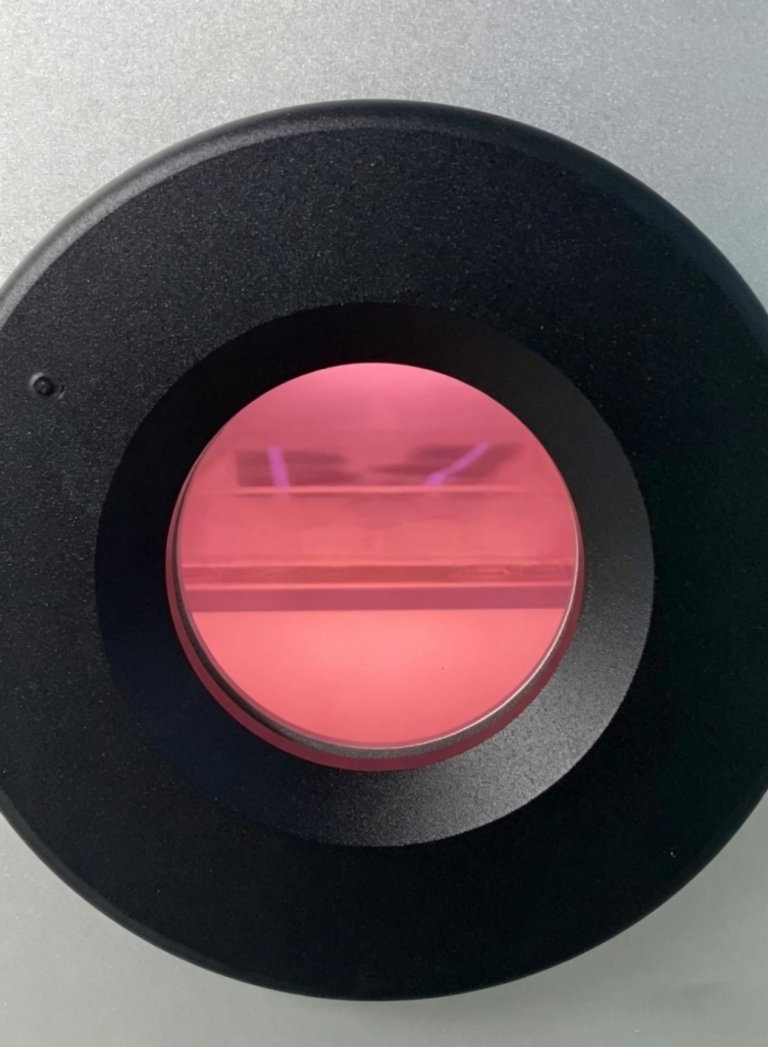
Plasma surface activation offers a dry method for removing thin organic contamination and increasing surface energy immediately before the bonding step.
PBT is a polymer with a relatively low-affinity surface for many liquid adhesives. If the adhesive does not wet the fiber properly, the contact area at the root remains limited.
This can appear as weak root bonding, local debonding or lash fibers pulling away during handling, packaging or use.
Lubricants and silicone-based finishing materials are commonly associated with polymer-fiber processing. Even a thin residual film can become a weak boundary layer between the PBT fiber and adhesive.
The residue may be difficult to see visually, which makes troubleshooting inconsistent bonding particularly frustrating.
Alcohol wiping can remove accessible surface oil, but the result depends on operator technique, wiping coverage and drying conditions.
It also adds cleaning, drying and material-handling steps before bonding. For volume production, those extra manual variables can make batch-to-batch consistency harder to control.
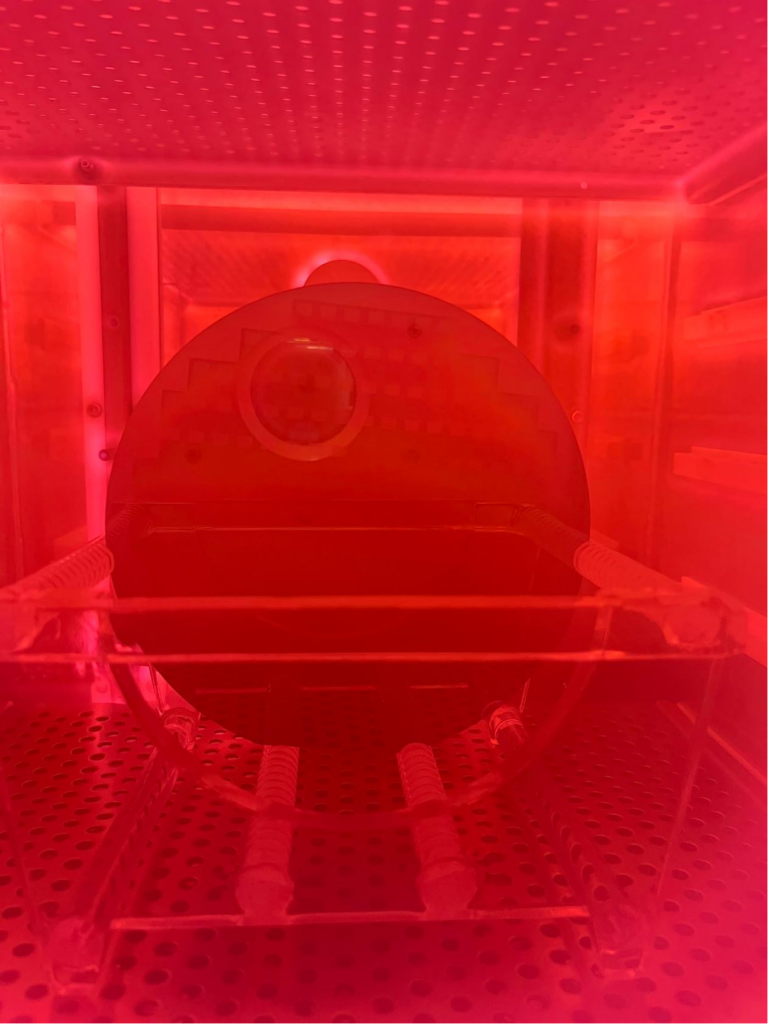
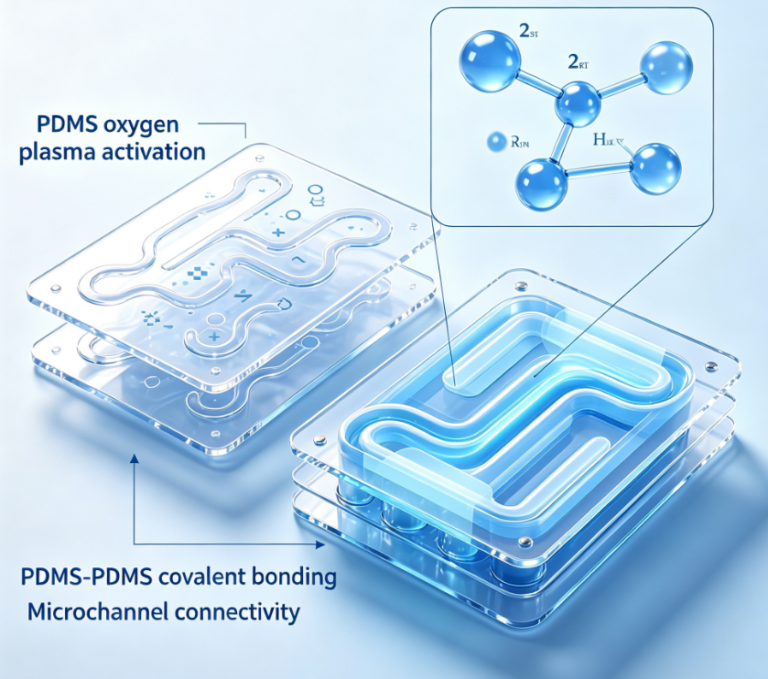
In a vacuum plasma chamber, gas is energized into reactive ions, radicals and other active species. These species interact with the outermost surface of the PBT fiber.
The treatment has two useful effects for eyelash manufacturing:
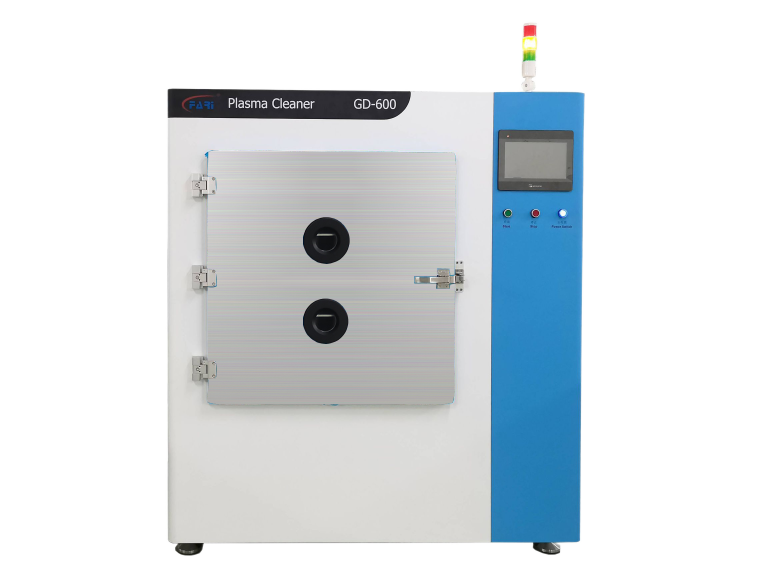
FARI provides vacuum plasma cleaners for controlled batch processing and plasma treatment for polymer surfaces where adhesion and coating performance depend on surface preparation.
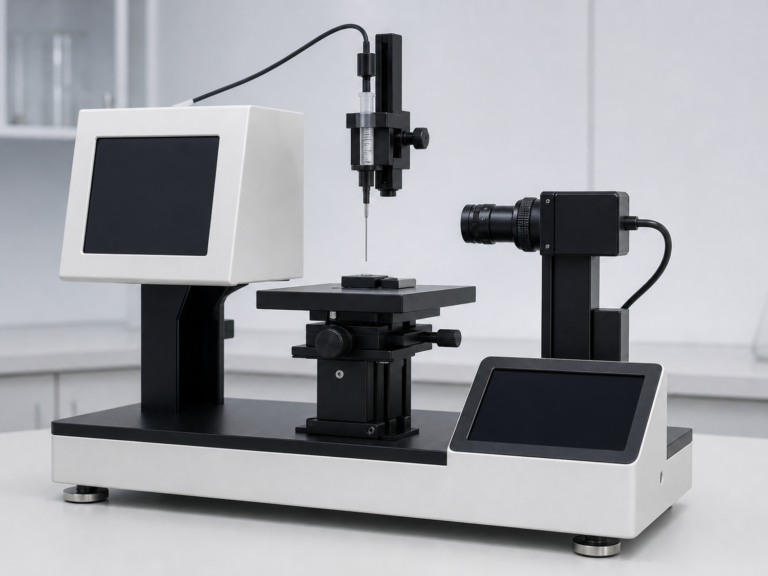
Before treatment, adhesive may form a concentrated bead around the fiber bundle instead of spreading over the available bonding area.
After surface activation, improved wettability helps the adhesive contact the PBT more uniformly. This gives the bonding process a more consistent surface to work with.
Better cleaning and wetting reduce the risk that an invisible oil or silicone layer remains between the adhesive and the fiber.
Plasma does not replace correct adhesive selection or curing conditions, but it removes one important source of interface variation.
Vacuum plasma treatment is dry. Once the cycle is complete, the lashes can move directly to the next manufacturing step without a water rinse or solvent-drying stage.
With a properly developed recipe, low-temperature plasma treatment can activate PBT without changing the intended curl or soft feel of the lash.
Like any surface process, excessive power or exposure should be avoided. Over-treatment can cause unwanted surface etching or a change in appearance.
The most practical location is immediately before adhesive application.
Plasma-activated polymer surfaces gradually lose some of their increased surface energy as they remain exposed to air. The supplied PBT application data recommends completing adhesive application within approximately 0–24 hours after treatment, with the shortest practical delay preferred.
A typical production sequence can therefore be:
This can indicate excessive plasma exposure. High power or treatment times that are too long may etch the polymer surface more aggressively than needed.
The solution is not to eliminate plasma, but to optimize the process window for cleaning and activation without over-treatment.
If fine lash tips show brittleness or splitting, the exposed tip area may be receiving too much plasma dose. Fixture design, power and treatment time should be reviewed.
Normally, no additional wet wash is required as part of the plasma step. The process is dry, so correctly handled parts can proceed directly to adhesive application.
The two processes do not perform exactly the same function.
Alcohol cleaning is primarily a solvent-cleaning operation. Plasma can combine fine surface cleaning with activation, changing the surface condition that controls adhesive wetting.
That distinction is important when the production problem is not simply visible oil, but repeated weak bonding even after conventional cleaning.
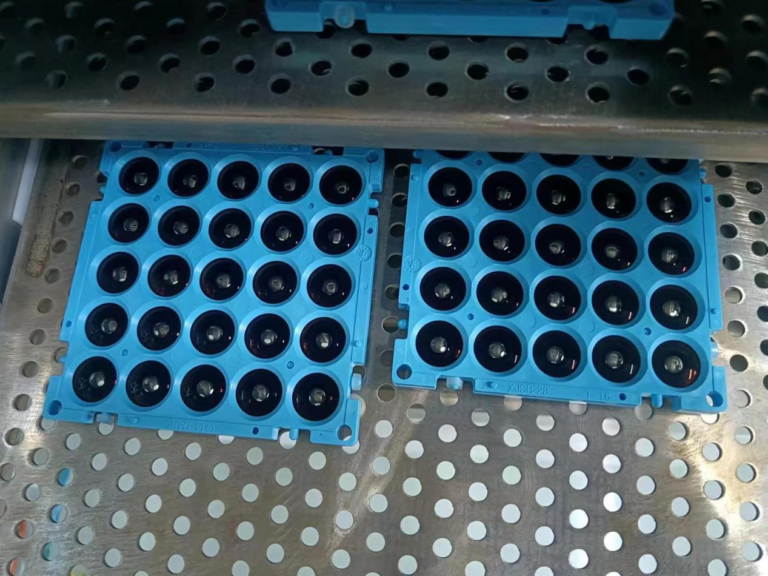
For product development and smaller batches, a compact unit such as the GD-10 laboratory vacuum plasma cleaner provides controlled gas, power and treatment settings.
For larger production volumes, chamber capacity, fixture layout and handling automation should be matched to the number and arrangement of lash trays per batch.
It should not under a correctly optimized cleaning and activation recipe. Visible whitening or excessive mattification can indicate over-treatment.
As soon as practical. For the application described here, processing within 24 hours is preferred because surface activation gradually decays during storage.
A correctly controlled process is intended to modify only the surface. Excessive plasma dose, particularly on very fine exposed tips, should be avoided.
No. This is one of the main reasons it is useful for PBT. In addition to removing thin contamination, plasma can increase surface energy and improve adhesive wetting.
The final recipe should be developed around the exact fiber, surface finish, adhesive, fixture and required production speed.
If you are dealing with inconsistent root adhesion or silicone residue on synthetic lash fibers, contact FARI Plasma with your material and production requirements to evaluate a suitable plasma process.



English

Spanish
Rogatus ad ultimum admissusque in consistorium ambage nulla praegressa inconsiderate