

Your adhesive bonding keeps failing because the surface you’re bonding to is rejecting the adhesive — not because the adhesive itself is defective. Most polymers, composites, and even some metals have surface energies too low for adhesives to properly wet and grip, leading to weak joints that peel, crack, or delaminate under stress. Plasma surface treatment raises that surface energy in seconds, creating a chemically active substrate that adhesives bond to with dramatically higher strength — often eliminating the need for primers, abrasion, or solvent wipes entirely.
Here’s a statistic that surprises most engineers: over 80% of adhesive bond failures are adhesive failures — meaning the glue peeled cleanly off the substrate rather than tearing through the adhesive layer (cohesive failure). That distinction matters enormously. Cohesive failure means your adhesive reached its maximum strength and the joint was properly made. Adhesive failure means the bond never really formed in the first place.
The culprit is almost always low surface energy. Materials like polypropylene (PP), polyethylene (PE), PTFE, silicone, and many engineering plastics have inherently low surface energies — typically 28–34 mN/m. For an adhesive to wet a surface and create a strong bond, the substrate’s surface energy needs to exceed the adhesive’s surface tension, usually by at least 10 mN/m. When it doesn’t, the adhesive beads up like water on a waxed car hood. It sits on top rather than spreading into the micro-topography.
Even materials with adequate surface energy — aluminum, steel, glass — can fail if they’re contaminated. Mold release agents, fingerprint oils, silicone residues, and machining fluids create an invisible barrier between your adhesive and the actual substrate. You might not see the contamination, but the adhesive certainly feels it. A 2-nanometer layer of silicone oil is enough to cut bond strength by 60% or more.
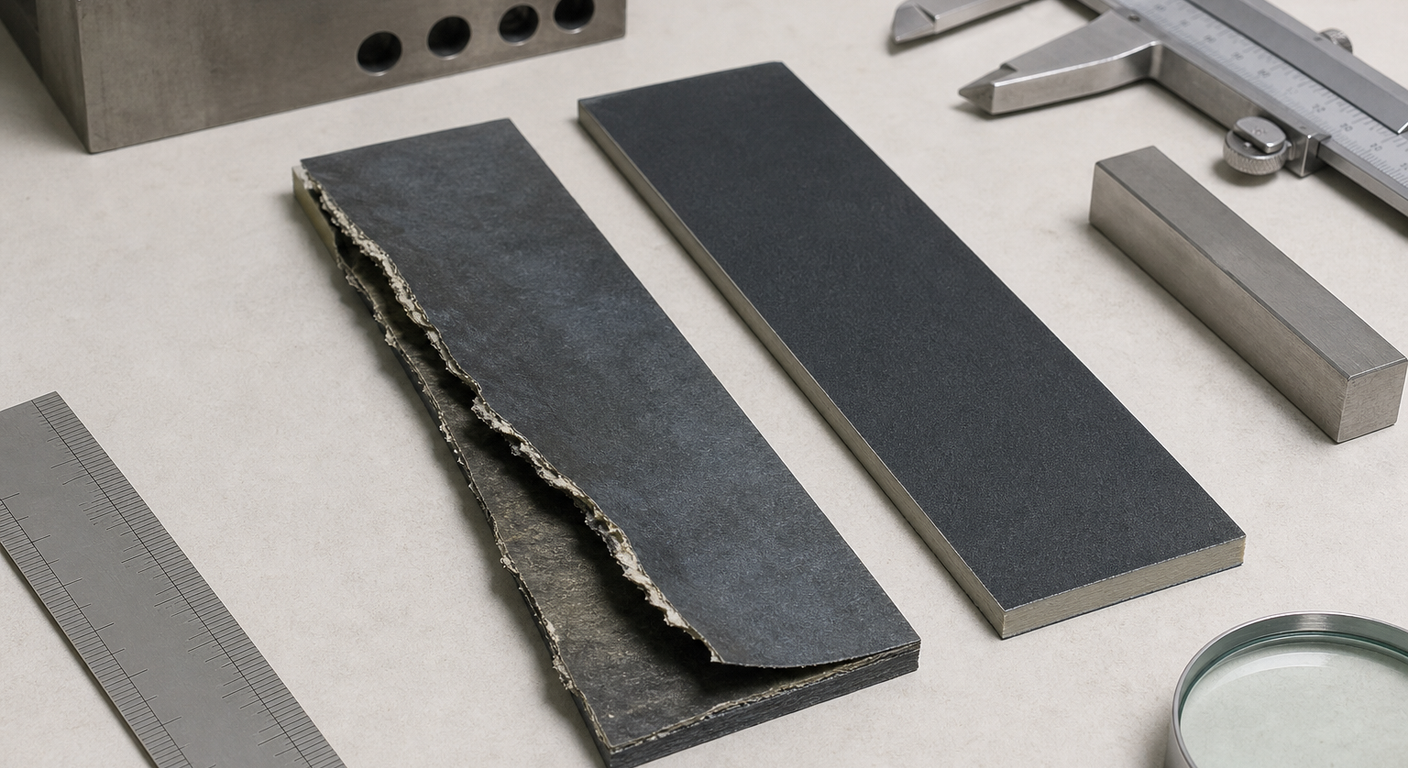
Surface energy is the single most reliable predictor of whether an adhesive bond will hold. Think of it as a measure of how “hungry” a surface is for molecular interaction. High surface energy means the surface actively attracts liquids and adhesives. Low surface energy means it repels them.
The quickest way to gauge surface energy is a water contact angle measurement. Place a droplet of deionized water on the surface and measure the angle where the droplet meets the substrate. Below 30° and you have excellent wettability — adhesives will spread and bond well. Above 90° and you’re fighting physics. Most untreated polyolefins sit at 95–105°, which is why bonding PP or PE without surface treatment is an exercise in frustration.
For structural adhesive bonding, you generally want surface energy above 50 mN/m. For printing and coating adhesion, 42–46 mN/m is often sufficient. The gap between where most polymers start (28–34 mN/m) and where they need to be (50+ mN/m) is exactly the gap that plasma treatment closes. And it does so without altering the bulk material properties — only the top few nanometers change.
If you want to understand the broader science behind this, our technology and knowledge resources break down the physics in detail.
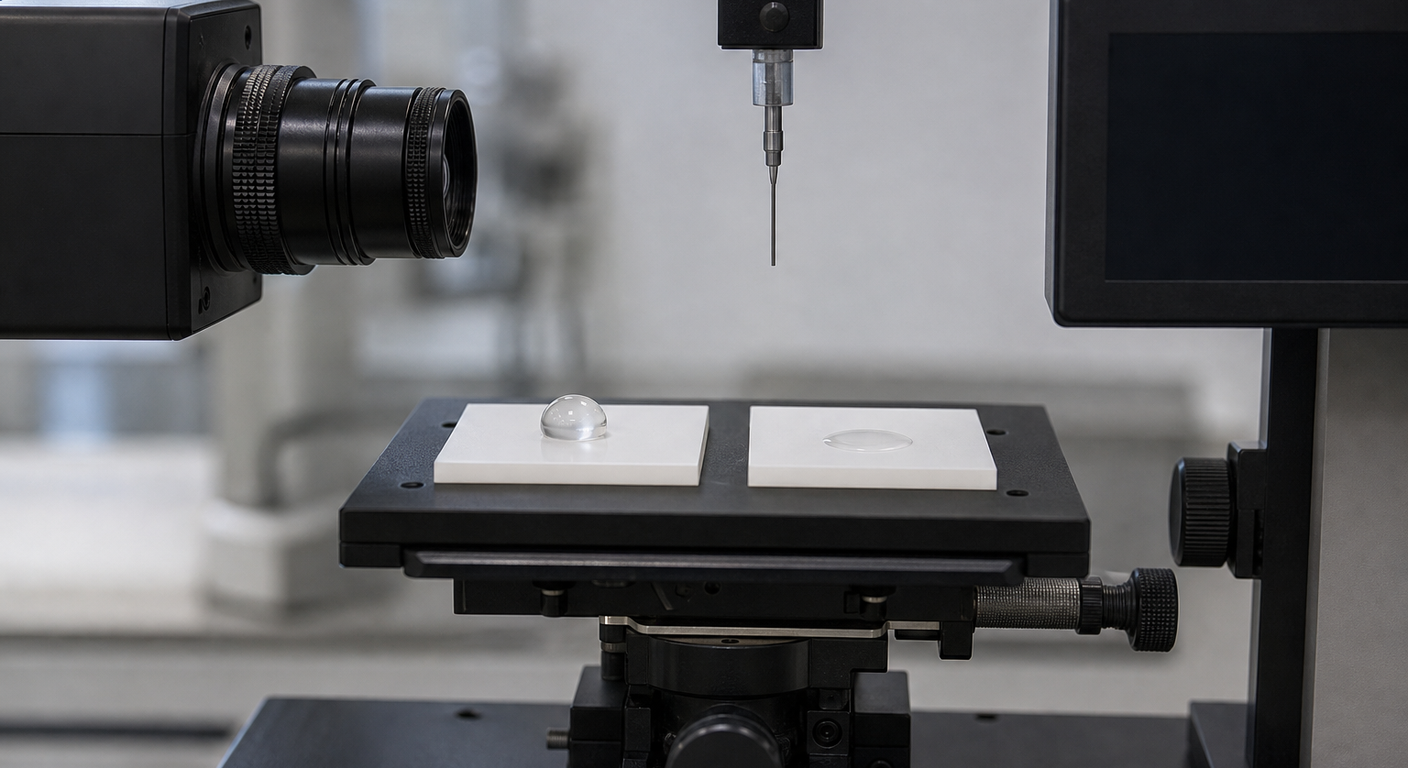
Plasma isn’t magic — it’s physics and chemistry happening at atmospheric or low-pressure conditions, and it does three things simultaneously that transform a surface for bonding.
Plasma species — ions, radicals, UV photons — bombard the surface and break down organic contaminants at the molecular level. Oils, mold release agents, and fingerprint residues are volatilized into CO₂ and H₂O and pumped away. This isn’t just pushing dirt around like a solvent wipe; it’s eliminating contamination down to the monolayer level.
Las especies reactivas del plasma rompen los enlaces C–H y C–C en la superficie del polímero y los reemplazan con grupos funcionales polares: grupos hidroxilo (–OH), carbonilo (C=O), carboxilo (–COOH) y amina (–NH₂). Estos grupos que contienen oxígeno y nitrógeno son polares, lo que aumenta drásticamente la energía superficial. Una superficie de polipropileno que comenzó con 29 mN/m puede alcanzar 56–62 mN/m después de solo 2–5 segundos de tratamiento con plasma atmosférico.
Dependiendo de la química del gas y el tiempo de exposición, el plasma puede grabar la superficie a escala nanométrica, aumentando el área de contacto efectiva para el adhesivo. Este efecto de interbloqueo mecánico complementa la activación química, creando uniones que son tanto químicamente fuertes como físicamente ancladas.
El resultado: un adhesivo que antes se despegaba con la presión de un dedo ahora requiere fuerza destructiva para separarse, y el modo de falla cambia de adhesivo a cohesivo, que es exactamente lo que se desea.
La teoría está bien, pero las plantas de producción exigen resultados. Aquí hay dos escenarios donde el tratamiento con plasma convirtió fallas crónicas de unión en uniones confiables y repetibles.
Un proveedor de nivel uno de automoción estaba uniendo paneles de TPO (olefina termoplástica) con adhesivo termofusible de poliuretano. Las tasas de rechazo rondaban el 12–15% debido a la delaminación en pruebas de ciclos térmicos. Habían probado el tratamiento con llama, pero la distancia inconsistente de la llama causaba marcas de quemadura y deformación dimensional en secciones delgadas. Después de cambiar al tratamiento con plasma atmosférico integrado directamente en su línea de ensamblaje, la energía superficial saltó de 31 mN/m a 58 mN/m. Las tasas de rechazo cayeron por debajo del 0.5%, y eliminaron por completo el paso de imprimación, ahorrando aproximadamente €0.35 por pieza solo en costos de material.
Un fabricante de dispositivos médicos necesitaba unir un cubo de poliamida al eje de un catéter de PTFE usando un adhesivo de curado UV. El PTFE es notoriamente difícil de unir: la energía superficial ronda los 18–20 mN/m, una de las más bajas de cualquier polímero. El tratamiento con plasma de baja presión con un gas formador (95% N₂ / 5% H₂) elevó la energía superficial por encima de 50 mN/m y creó grupos funcionales amina que reaccionaron con la química del adhesivo. Los resultados de la prueba de tracción mejoraron de 2.1 N (sin tratar) a 14.8 N (tratado con plasma), una mejora de 7× que superó la especificación de diseño.
Explore más sobre cómo el plasma se integra en los flujos de trabajo de producción en nuestra página de aplicaciones.
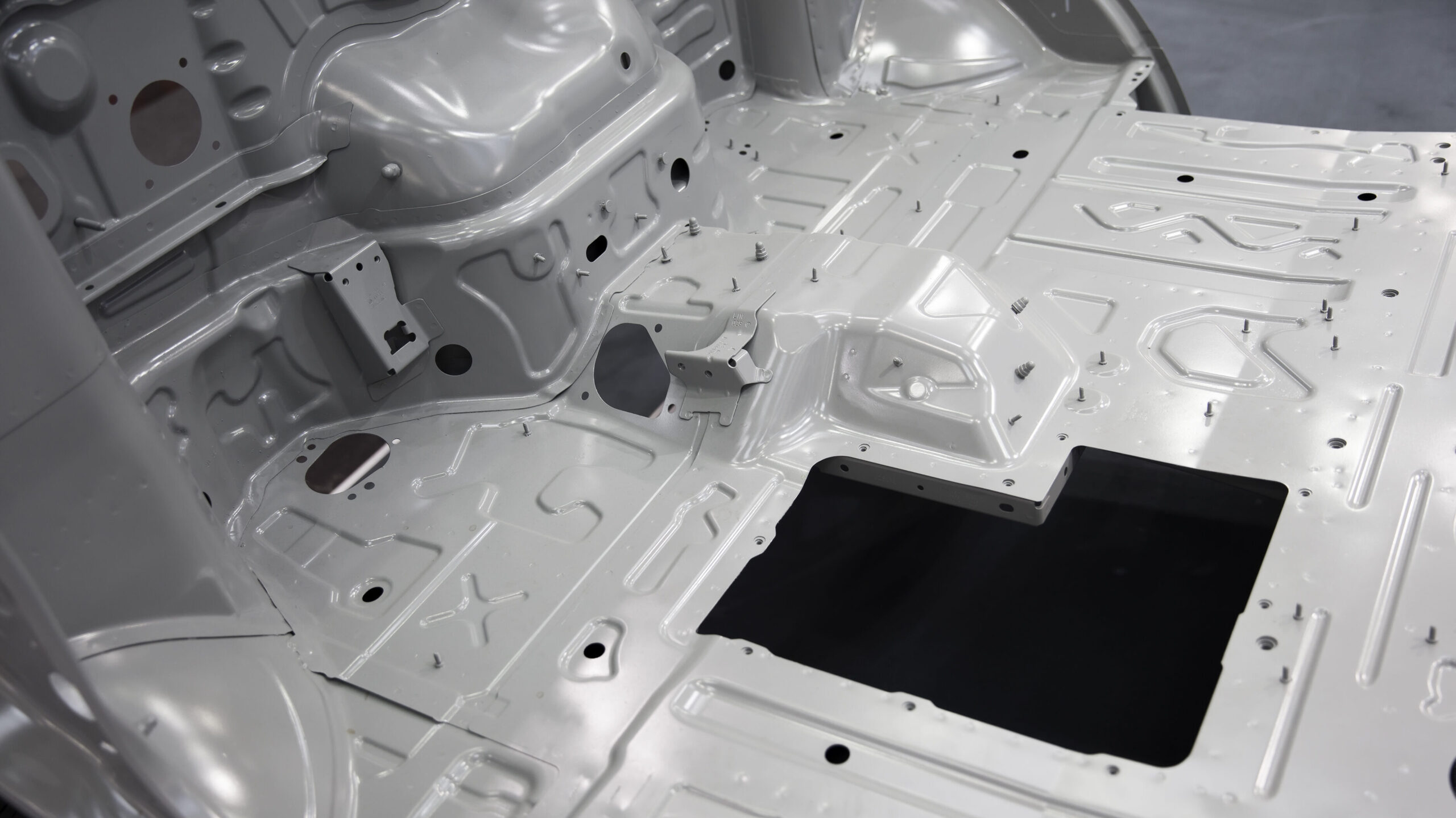
Plasma isn’t the only surface preparation method, of course. But the alternatives each carry significant trade-offs that plasma avoids.
Isopropanol or acetone wipes remove gross contamination but don’t increase surface energy. They also introduce their own contamination risks — residues from the wipe material, incomplete evaporation, and operator variability. Two technicians wiping the same part will get different results. And VOC regulations are tightening globally, making solvent use increasingly expensive and compliance-heavy.
Mechanical abrasion creates surface roughness for mechanical interlocking, but it doesn’t add polar functional groups. It also generates particulate contamination that can become trapped under the adhesive, creating voids and stress concentrators. For precision parts with tight tolerances, abrasion is often not an option at all.
El tratamiento con llama sí aumenta efectivamente la energía superficial, pero requiere un control preciso de la distancia entre el quemador y la superficie (típicamente 6–10 mm), agrega calor significativo a la pieza y plantea preocupaciones de seguridad con llamas abiertas en producción. Para geometrías 3D o sustratos sensibles al calor, el tratamiento con llama es poco práctico.
Las imprimaciones funcionan, pero agregan costo de material (€0.10–€0.80 por pieza dependiendo de la química), tiempo de secado (minutos a horas) y otro paso de proceso que puede introducir defectos. También tienen limitaciones de vida útil y requieren una gestión cuidadosa del inventario.
El tratamiento con plasma elimina todos estos problemas: sin químicos, sin daño por calor, sin partículas, sin variabilidad del operador y tiempos de proceso medidos en segundos en lugar de minutos.
No todos los sistemas de plasma son iguales, y elegir el tipo incorrecto para su aplicación puede socavar los resultados.
Also called atmospheric plasma jets or blown-arc plasma, these systems operate at ambient pressure and can be mounted on robotic arms or integrated inline. They treat a narrow strip (typically 5–25 mm wide) and are ideal for selective treatment of bond lines, sealing surfaces, or specific areas on a part. Treatment speeds of 5–50 m/min are common. If you’re bonding a specific joint area on an otherwise finished part, atmospheric plasma is usually the right call.
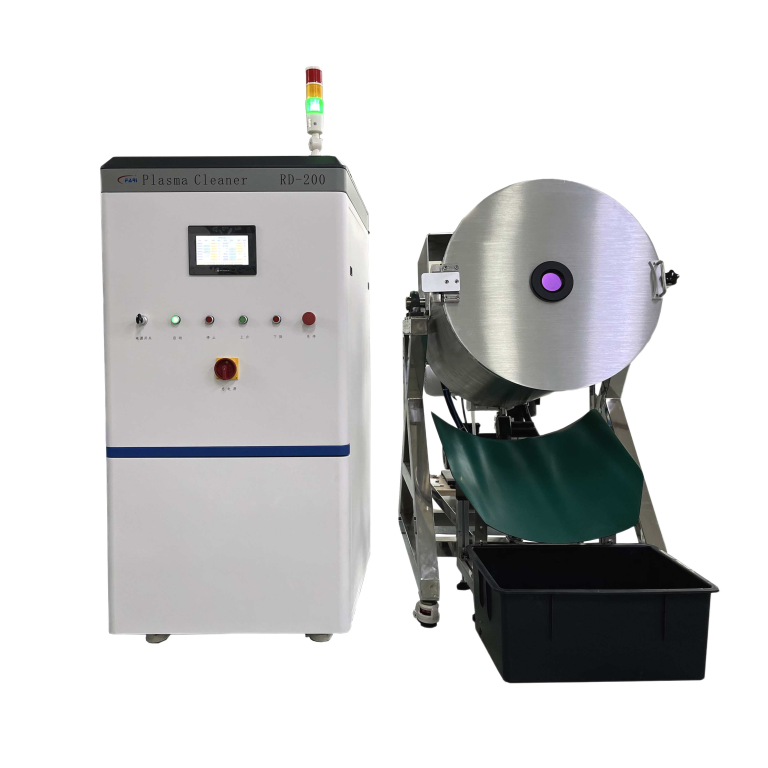
These batch systems treat entire parts uniformly inside a vacuum chamber. They’re the better choice for complex 3D geometries, internal surfaces (like the inside of tubing), or when you need to treat hundreds of small parts simultaneously. Gas chemistry can be precisely controlled — oxygen, nitrogen, argon, forming gas, or custom mixtures — giving you fine-tuned control over the functional groups deposited on the surface. Cycle times are typically 1–10 minutes including pump-down.
Para aplicaciones de unión en línea de alta velocidad (automoción, ensamblaje electrónico, embalaje), el plasma atmosférico gana en velocidad y simplicidad de integración. Para dispositivos médicos, componentes aeroespaciales o cualquier aplicación que requiera un tratamiento uniforme en toda la superficie, el plasma de baja presión ofrece resultados más consistentes. Nuestra gama de productos de plasma cubre ambos enfoques.
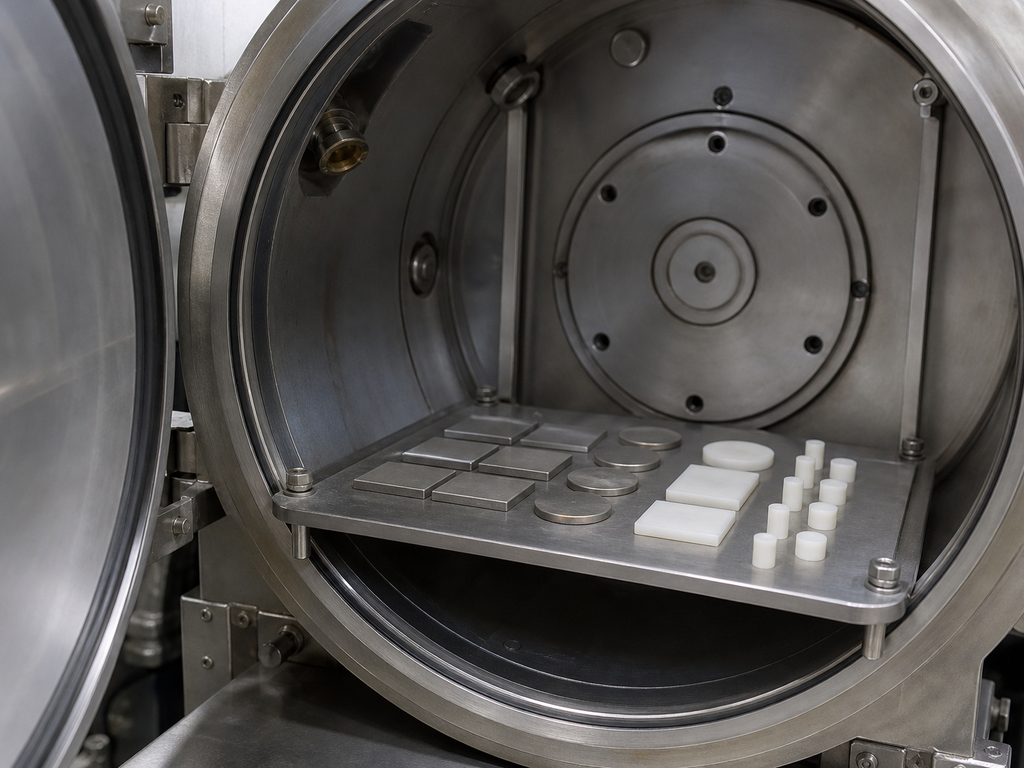
Plasma treatment isn’t a set-it-and-forget-it solution. The wrong parameters can under-treat a surface (no improvement) or over-treat it (degradation). Here are the variables that matter most.
Para el plasma atmosférico, la distancia entre la boquilla y la superficie es crítica: normalmente de 5 a 15 mm en la mayoría de los sistemas. Si está demasiado lejos, las especies reactivas se recombinan antes de llegar a la superficie. Si está demasiado cerca, corre el riesgo de daño térmico. La velocidad de tratamiento determina la dosis: velocidades más lentas entregan más energía por unidad de área. Un punto de partida común es 10 mm de distancia a 10 m/min, y luego optimizar a partir de ahí según las mediciones del ángulo de contacto.
El aire seco comprimido (CDA) es el predeterminado para sistemas atmosféricos y funciona bien para la mayoría de la activación de polímeros. Para sistemas de baja presión, el plasma de oxígeno maximiza los grupos hidroxilo y carboxilo, el plasma de nitrógeno o amoníaco añade grupos amina (excelente para adhesivos epoxi), y el plasma de argón proporciona el efecto de limpieza y grabado más fuerte con una funcionalización mínima.
Esto sorprende a muchos: la activación por plasma no es permanente. Las superficies tratadas sufren una "recuperación hidrofóbica" a medida que las cadenas de polímero rotan y migran para minimizar la energía superficial. En la mayoría de los polímeros, tiene una ventana de unión de 30 minutos a 72 horas después del tratamiento, según el material y las condiciones de almacenamiento. El HDPE se recupera más rápido que el PEEK, por ejemplo. La regla práctica: una lo antes posible después del tratamiento, idealmente dentro del mismo ciclo de producción.
Para obtener orientación detallada sobre la optimización de estos parámetros para sus materiales específicos, póngase en contacto con nuestro equipo de aplicaciones.
You can’t manage what you can’t measure. Fortunately, verifying plasma treatment effectiveness is straightforward.
The quickest shop-floor method. Apply dyne inks of increasing surface tension to the treated surface. If the ink wets out (spreads into a film rather than beading up), the surface energy exceeds that ink’s value. It’s semi-quantitative but fast and cheap — ideal for incoming quality checks. Aim for the ink level to exceed your adhesive’s surface tension by at least 10 mN/m.
The gold standard for R&D and process validation. An automated goniometer dispenses a precise droplet and measures the contact angle to ±0.1°. This gives you quantitative surface energy data you can correlate directly to bond strength. If you’re developing a new bonding process, invest in goniometry data — it will save you months of trial-and-error.
Ultimately, bond strength is what matters. Standardized tests like ASTM D1002 (lap shear), ASTM D3330 (peel adhesion), or ISO 4587 give you hard numbers. The key indicator of a well-prepared surface isn’t just higher force values — it’s the shift from adhesive failure to cohesive failure. When the adhesive tears through itself rather than peeling off the substrate, you know the surface treatment is doing its job.
Nuestra documentos técnicos y hojas de datos incluyen datos de prueba detallados para combinaciones comunes de material y adhesivo.
If you’ve cycled through three different adhesive brands, tried every primer on the market, and still can’t get bonds to hold, the problem almost certainly isn’t the adhesive. It’s the surface. Plasma treatment addresses the root cause of adhesive failure — low surface energy and contamination — rather than trying to compensate with thicker adhesive layers or expensive specialty formulations.
La economía es convincente: los sistemas de plasma suelen amortizarse en 6 a 12 meses mediante la eliminación de costos de imprimación, la reducción de tasas de rechazo y ciclos más rápidos. El caso ambiental es aún más sólido: sin solventes, sin COV, sin corrientes de desechos peligrosos.
Whether you’re bonding polyolefins in automotive, PTFE in medical devices, or composites in aerospace, plasma treatment is the most reliable, repeatable, and scalable way to ensure adhesive bonds that actually last. Explore our capacidades de tratamiento con plasma para ver cómo podemos resolver tu desafío específico de unión, o contáctanos directamente para hablar sobre tu aplicación.



Inglés

Español
Rogatus ad ultimum admissusque in consistorium ambage nulla praegressa inconsiderate