

If your parts are flat or easily accessible and you need inline speed, atmospheric plasma systems offer the fastest path to inline integration without a vacuum chamber. If your parts have complex geometries — deep channels, internal cavities, or multi-sided surfaces that all need uniform activation — low-pressure (vacuum) plasma is the technology that will actually deliver. The real decision comes down to part geometry, throughput requirements, process gas needs, and budget — and getting it wrong means either over-investing in equipment you don’t need or under-treating surfaces that end up failing in the field.
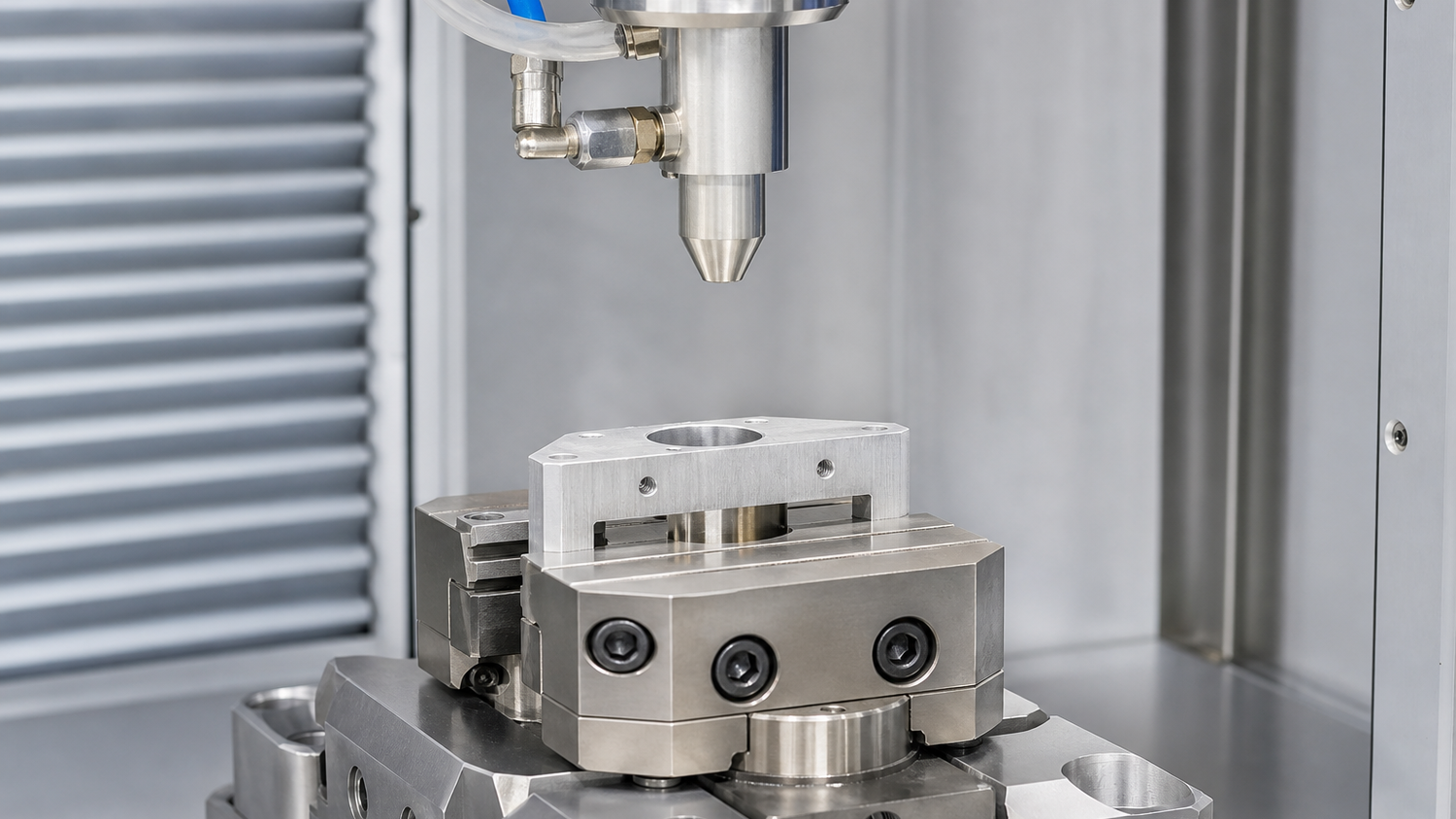
Atmospheric plasma fires a focused jet or curtain of ionized gas at ambient pressure — no chamber, no pump-down, no waiting. You mount it on a robot arm or over a conveyor and it treats surfaces as parts move past. Low-pressure plasma, by contrast, places parts inside a sealed vacuum chamber, evacuates the air, then ignites a plasma that fills the entire chamber volume and reaches every exposed surface simultaneously.
That single architectural difference — open-air jet versus enclosed chamber — cascades into every practical consideration: speed, uniformity, cost, gas chemistry, and the types of parts you can treat. Neither technology is universally superior. But one of them is almost certainly better for your specific production scenario.
Atmospheric plasma systems generate a plasma discharge at ambient pressure, typically using compressed air or nitrogen as the process gas. The ionized stream exits through a nozzle — sometimes as a focused jet (for precision work), sometimes as a wide curtain (for broad coverage). Surface energies jump from ~30 mN/m to 60–72 mN/m in a single pass lasting fractions of a second.
Because there is no chamber to load, evacuate, process, vent, and unload, atmospheric plasma integrates directly into continuous production lines. Treatment speeds of 10–200 m/min are common. For high-volume manufacturing — think automotive trim panels, packaging films, or electronic housings moving on a conveyor — this speed advantage is decisive.
The plasma plume follows line-of-sight physics. If the nozzle can’t “see” a surface, that surface doesn’t get treated. Recessed features, blind holes, and the backsides of parts require repositioning or multiple nozzles, which adds complexity and cost. For a simple flat gasket surface, that’s irrelevant. For a complex injection-molded housing with internal bonding surfaces, it’s a deal-breaker.
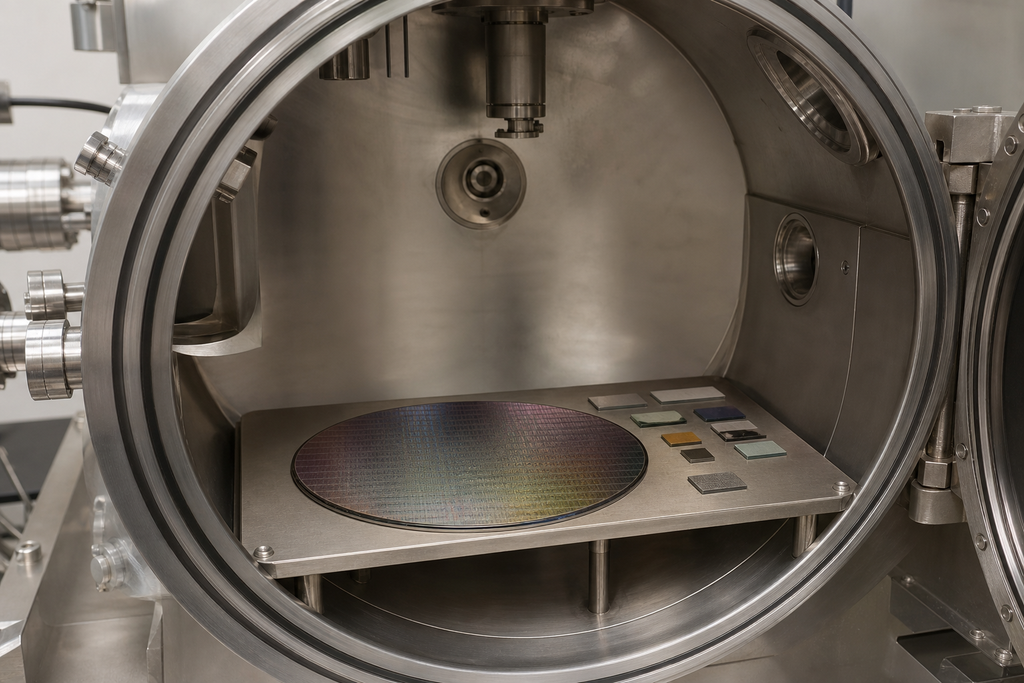
Low-pressure plasma systems operate at pressures typically between 0.1 and 2 mbar. Parts are loaded into a vacuum chamber — ranging from benchtop units to walk-in industrial chambers — the system pumps down, introduces process gas, and ignites the plasma via RF or microwave energy. The plasma fills the entire chamber volume, wrapping around every exposed surface uniformly.
A part with undercuts, internal channels, threaded holes, or stacked layers will receive consistent activation across all surfaces. This is physically impossible with a directional atmospheric jet. For medical device components that require validated, repeatable surface energy across complex geometries, low-pressure plasma is the standard for good reason.
Operating under vacuum allows precise control of process gas composition. Oxygen plasma for aggressive organic cleaning. Argon for gentle surface activation. Hydrogen for oxide reduction on metals. Fluorocarbon gases for hydrophobic functionalization. This chemical versatility is something atmospheric systems simply cannot match — most are limited to air or nitrogen at ambient pressure.
Pump-down, process, and vent cycles typically run 2–15 minutes depending on chamber size and recipe. That makes low-pressure plasma inherently a batch process. You can optimize throughput with larger chambers, automated loading, or dual-chamber configurations, but you will never match the continuous inline speed of an atmospheric system.
Aquí tiene un desglose comparativo directo de los criterios más importantes a la hora de elegir entre plasma atmosférico y plasma de baja presión para producción:
| Criterio | Plasma atmosférico | Plasma de baja presión |
|---|---|---|
| Entorno de operación | Aire libre, sin necesidad de vacío | Requiere cámara de vacío |
| Uniformidad del tratamiento en piezas complejas | Moderada: depende de la línea de visión | Excelente: penetra en huecos y socavados |
| Integración en producción en línea | ✓ Fácil integración | ✗ Normalmente proceso por lotes |
| Rendimiento típico | Alto: procesamiento continuo | Moderado: limitado por el ciclo de la cámara |
| Costo del equipo de capital | Menor inversión inicial | Mayor inversión inicial |
| Flexibilidad de gases de proceso | Limitada (principalmente aire comprimido/N₂) | Amplia gama (O₂, Ar, H₂, CF₄, etc.) |
| Profundidad / penetración del tratamiento | Superficial, localizado | Profundo, activación en toda la superficie |
| Mejor caso de uso | Superficies planas o accesibles a alta velocidad | Piezas 3D complejas que requieren tratamiento uniforme |
Utilice esta tabla como filtro inicial, pero valide siempre con pruebas de proceso en sus piezas reales. Las mediciones de energía superficial y las pruebas de adhesión en muestras tratadas confirmarán si el método elegido ofrece el nivel de activación que exige su proceso posterior. Nuestra página de capacidades de tratamiento de plasma detalla los servicios de prueba y validación que ofrecemos.
Las comparaciones abstractas solo llegan hasta cierto punto. Veamos dos escenarios concretos que ilustran cómo se desarrolla la decisión en la práctica.
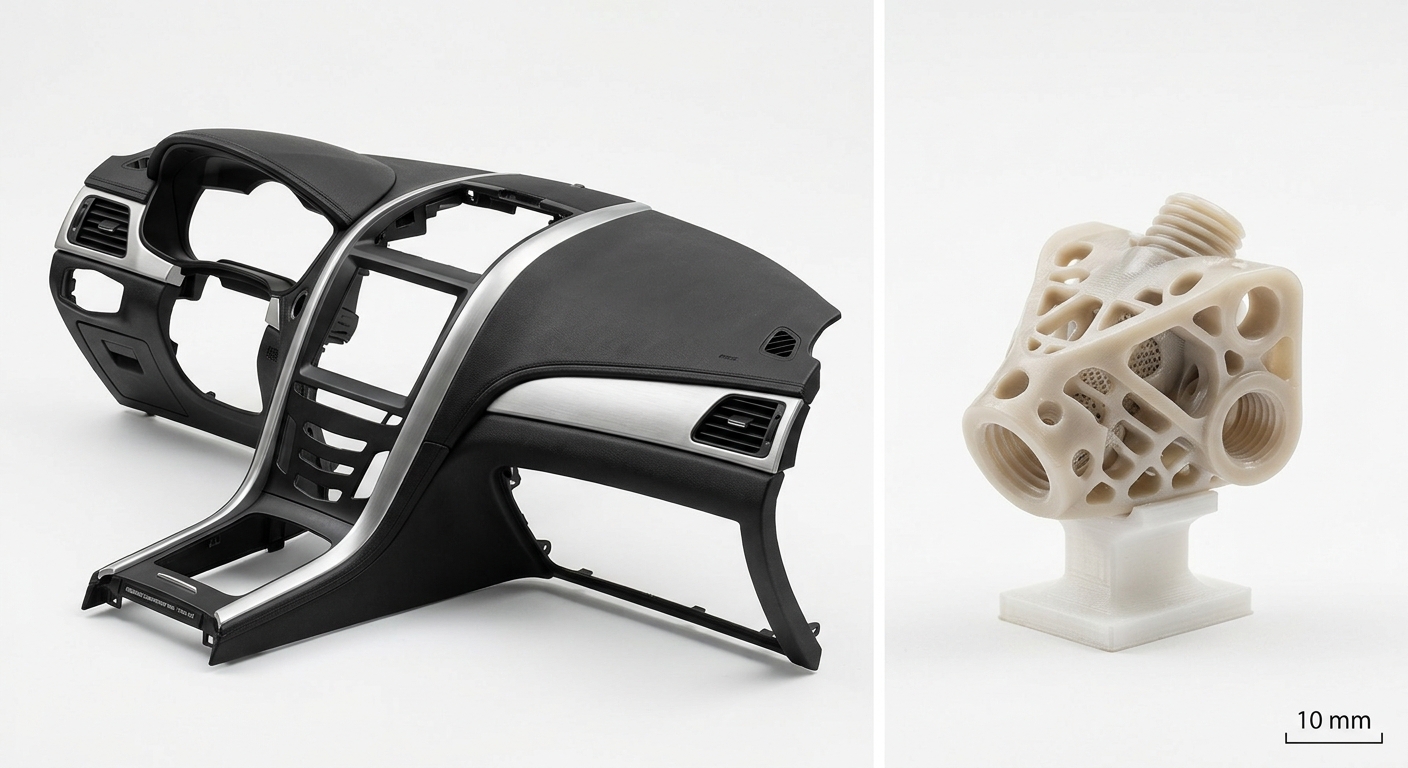
Un proveedor de nivel 1 para automoción necesitaba mejorar la adhesión de la pintura en paneles de molduras de tablero de polipropileno. Las piezas eran grandes, relativamente planas y se movían por una línea de pintura a 12 metros por minuto. Un chorro de plasma atmosférico montado en un robot de 6 ejes trató las superficies de unión en línea, inmediatamente antes de la estación de pintura. Sin ralentización de la producción, sin pasos de manipulación adicionales, sin cámara de vacío lo suficientemente grande para los paneles del tablero. El plasma atmosférico era la opción obvia, y la única práctica.
Un fabricante de dispositivos médicos necesitaba activar jaulas de fusión espinal de PEEK (poliéter éter cetona) para promover la adhesión de las células óseas. Estas piezas tenían estructuras de celosía porosas, canales internos y estrictos requisitos reglamentarios de uniformidad del tratamiento en el 100% de la superficie. El plasma de oxígeno de baja presión en un proceso de cámara validado proporcionó lecturas uniformes de energía superficial (dentro de ±2 mN/m) en todas las superficies, incluso en el interior de la celosía. Un chorro atmosférico habría dejado las superficies internas completamente sin tratar.
Dos piezas diferentes, dos realidades de producción diferentes, dos respuestas correctas diferentes. Su decisión debe seguir la misma lógica: empiece por la pieza, no por la tecnología.
Antes de solicitar presupuestos o programar demostraciones, repase estas cinco preguntas. Le ayudarán a reducir rápidamente sus opciones.
Si necesita ayuda para aplicar estas preguntas a su escenario de producción específico, nuestro resumen de aplicaciones cubre las industrias y tipos de piezas con los que trabajamos a diario.
Esto es algo que los proveedores rara vez mencionan de antemano: algunas líneas de producción se benefician de implementar ambas tecnologías en diferentes etapas. No siempre es una cuestión de elegir una u otra.
Por ejemplo, un fabricante de electrónica de consumo podría usar plasma de baja presión en un proceso por lotes para limpiar y activar componentes de carcasas moldeadas por inyección (geometría compleja, múltiples superficies de unión), y luego usar un chorro de plasma atmosférico en línea para reactivar superficies planas de juntas inmediatamente antes de la dispensación de adhesivo, porque la energía superficial decae con el tiempo y el área de la junta es fácilmente accesible.
Considere un enfoque híbrido cuando su producto tenga tanto superficies internas complejas como superficies externas simples que necesiten tratamiento en diferentes etapas de producción. También considérelo cuando las piezas se traten en lotes (plasma de vacío) pero luego se almacenen antes de un paso de unión posterior: una reactivación atmosférica rápida en línea puede restaurar la energía superficial que ha decaído durante el almacenamiento.
Si todas sus necesidades de tratamiento pueden satisfacerse con una sola tecnología, agregar la segunda solo aumenta el costo de capital, la carga de mantenimiento y la complejidad del proceso. No diseñe una línea híbrida solo porque suene sofisticada. La simplicidad gana cuando ofrece el mismo resultado.
La forma de validar y monitorear el tratamiento con plasma difiere significativamente entre las dos tecnologías, y esto puede influir en su elección, especialmente en industrias reguladas.
La intensidad del tratamiento en sistemas atmosféricos depende de la distancia boquilla-superficie, la velocidad de desplazamiento, el nivel de potencia y el caudal de gas. Pequeñas variaciones en cualquiera de estos factores (una trayectoria robótica que se desvía 1 mm, una fluctuación en la velocidad de la cinta transportadora) pueden cambiar el resultado del tratamiento. El control de calidad en línea generalmente implica mediciones del ángulo de contacto o pruebas con tintas de dyne en piezas de muestra a intervalos regulares. Algunos sistemas avanzados incluyen espectroscopía de emisión óptica para monitoreo en tiempo real.
En el plasma de vacío, todo el volumen de la cámara alcanza una condición de plasma en estado estacionario. Cada pieza en la cámara recibe esencialmente el mismo tratamiento, controlado por la presión del gas, la potencia de RF, la composición del gas y el tiempo, todo lo cual se controla y registra con precisión. Esto hace que la validación del proceso sea más sencilla, por lo que los organismos reguladores en los sectores médico y aeroespacial a menudo prefieren los procesos de plasma de vacío. La documentación de validación es más simple cuando puede demostrar que el proceso es independiente de la geometría dentro de la cámara.
Para obtener más antecedentes técnicos sobre cómo el tratamiento con plasma interactúa con diferentes superficies, explore nuestros recursos de tecnología y conocimiento.
Hablemos de números reales, o al menos de rangos realistas, porque "depende" no es un presupuesto.
Una unidad de plasma atmosférico de una sola boquilla comienza alrededor de €5,000–€15,000 para el generador y la boquilla. Pero eso es solo la fuente de plasma. Agregue integración robótica (€30,000–€80,000+), gabinetes de seguridad, suministro de aire comprimido y utillaje, y una estación de plasma atmosférico totalmente integrada generalmente se sitúa entre €50,000 y €150,000. Los costos operativos son bajos (aire comprimido y electricidad), con reemplazos de boquilla cada 500–2,000 horas según el sistema.
Las unidades de plasma de vacío de sobremesa para I+D o producción de bajo volumen comienzan alrededor de €15,000–€40,000. Los sistemas a escala de producción con carga automatizada, cámaras grandes y capacidad de múltiples gases varían de €80,000 a €300,000+. Los costos operativos incluyen mantenimiento de la bomba de vacío, suministro de gas de proceso y reemplazo de electrodos. El tiempo de ciclo por lote es el costo oculto: determina cuántas piezas por hora puede tratar, lo que afecta directamente su costo por pieza.
Una boquilla atmosférica de 10.000 € que trata 10.000 piezas por hora tendrá un coste por pieza drásticamente menor que un sistema de vacío de 200.000 € que trata 500 piezas por hora. Pero si el sistema atmosférico no puede lograr la uniformidad de tratamiento requerida, el sistema más barato es el que realmente funciona. Calcule siempre el coste por pieza tratada con éxito , teniendo en cuenta las tasas de rechazo por tratamiento insuficiente.
Empiece por su pieza, no por el folleto de tecnología. Trace cada superficie que necesita tratamiento, identifique las limitaciones geométricas, defina su objetivo de producción y especifique los requisitos de química de gases. Ese ejercicio por sí solo eliminará una opción en la mayoría de las aplicaciones.
En los casos en que ambas tecnologías puedan funcionar, solicite pruebas de proceso. Ninguna comparación de especificaciones sustituye a tratar sus piezas reales y medir los resultados. Las mediciones del ángulo de contacto, las pruebas de adhesión por tracción y el análisis de superficie XPS en muestras tratadas le darán los datos para tomar una decisión segura.
En fariplasmatech, ayudamos a los fabricantes a navegar exactamente por esta decisión cada semana. Ya sea que necesite una sola boquilla atmosférica integrada en una línea existente o un sistema de plasma de vacío totalmente automatizado con gestión de recetas, nuestro equipo puede guiarle a través de las pruebas de proceso, la selección del sistema y la planificación de la integración. Póngase en contacto con nuestro equipo de ingeniería para iniciar la conversación, o explore nuestros productos de tratamiento de plasma para ver la gama completa de sistemas atmosféricos y de baja presión que ofrecemos.




Inglés

Español
Rogatus ad ultimum admissusque in consistorium ambage nulla praegressa inconsiderate